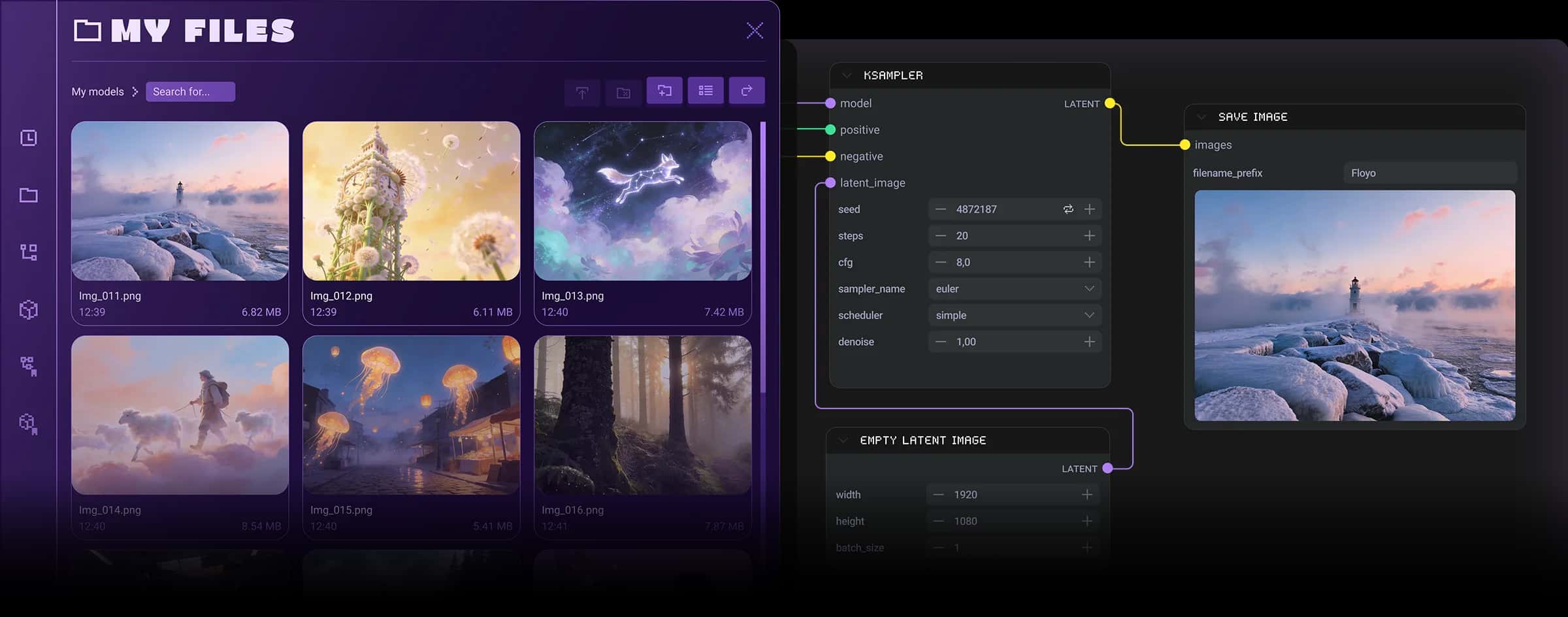
CRT-Nodes is a comprehensive collection of custom nodes designed for use with ComfyUI, enhancing the capabilities and flexibility of the user interface. This tool streamlines various processes, allowing users to execute complex tasks efficiently and effectively.
- Provides a wide range of specialized nodes for audio processing, image manipulation, and advanced sampling techniques.
- Integrates seamlessly with ComfyUI, enabling users to enhance their workflows without needing extensive programming knowledge.
- Offers unique functionalities such as dynamic prompt scheduling and various audio and video loaders to optimize media handling.
Context
CRT-Nodes serves as an extension for ComfyUI, aimed at enriching the node-based interface with a variety of custom nodes. Its primary purpose is to facilitate advanced functionalities in areas like audio processing, image manipulation, and machine learning, thereby enhancing the overall user experience.
Key Features & Benefits
The tool features an extensive library of nodes that cater to different tasks, such as audio frame adjustments, dynamic prompt scheduling, and image scaling. These nodes are designed to be user-friendly, making it easier for ComfyUI users to implement complex workflows without extensive coding knowledge.
Advanced Functionalities
CRT-Nodes includes advanced capabilities such as the ability to process audio and video files, manipulate images, and manage various machine learning models. Notable features include the ChronoEdit nodes for model training and the MiniMax H3 nodes for enhanced control over image generation, which can significantly improve the quality of outputs.
Practical Benefits
By incorporating CRT-Nodes into their workflows, users can achieve greater control over their projects, streamline processes, and enhance the quality of their results. The diverse range of nodes allows for efficient handling of tasks, ultimately leading to improved productivity and creativity within ComfyUI.
Credits/Acknowledgments
The CRT-Nodes project is maintained by the team at PGCRT, with contributions from various developers in the community. The repository is open-source and available under a suitable license, promoting collaboration and continuous improvement.