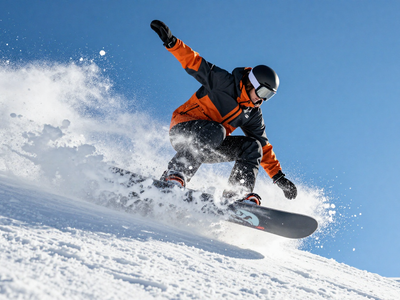
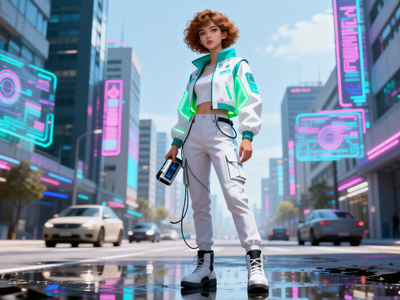
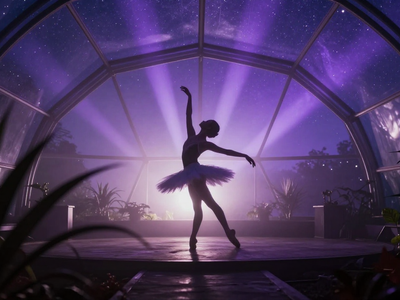
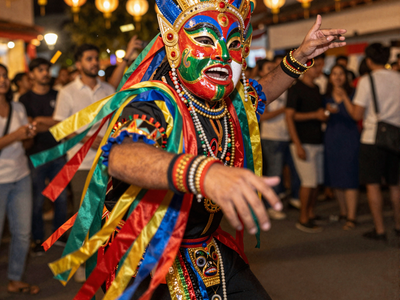
P-H3 Image for Text to Image
Turn a one-line idea into a detailed 8 megapixel image with P-H3-Image by Pruna AI. A helper model expands your prompt. Type your request and hit run.
Image
P-H3 Image
Text to Image
9

Nodes & Models
ResolutionSelector
UNETLoader
minimax_h3_fl2va_pruned_int8_convrot.safetensors
CLIPLoader
p-h3-image_text_encoder_int8_convrot.safetensors
p-h3-image_prompt_upsampler_w4a8.safetensors
PrimitiveStringMultiline
VAELoader
p-h3-image_vae_int8_convrot.safetensors
KSamplerSelect
RandomNoise
ManualSigmas
LoraLoaderModelOnly
p-h3-image_lora_bf16.safetensors
TextGenerateV2
MiniMaxH3SigmaShift
ComfySwitchNode
PreviewAny
PH3ImageConditioning
BasicGuider
SamplerCustomAdvanced
VAEDecode
SaveImage
ABOUT THE WORKFLOW
Turn a short idea into an 8 MP image
Type a one-line idea. A helper model rewrites it into a full scene description, and the image model draws it at 8 megapixels. You get one high-resolution PNG per run, with no reference image needed.
Model
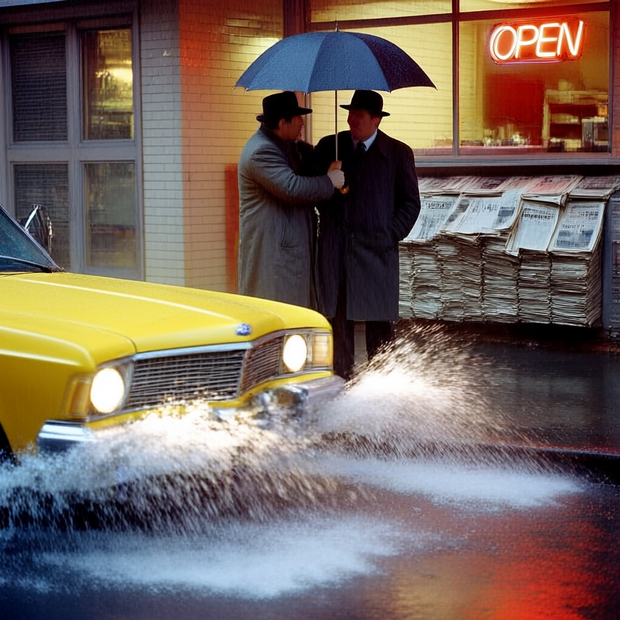
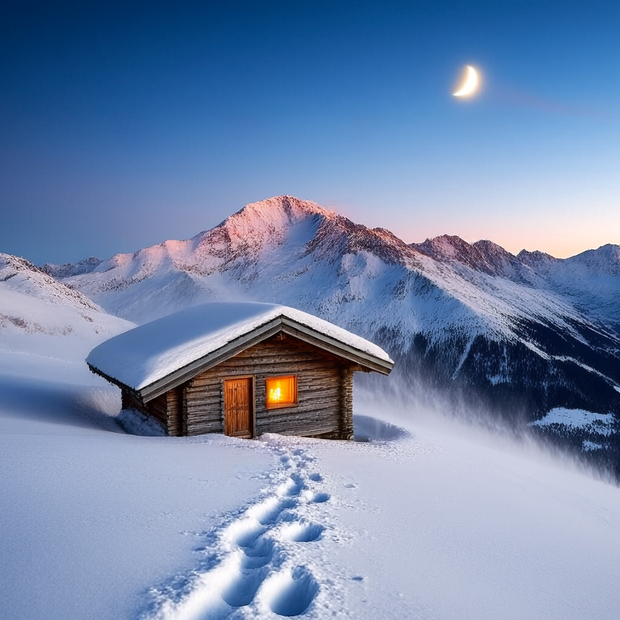
P-H3-Image by Pruna AI, an image model adapted from the MiniMax H3 video model. It is strongest at photorealism, film and editorial looks, and graphics with short quoted text.
HOW IT WORKS
Step 1. Write your request
Keep the first line as "Aspect ratio: 4:3" so it matches the size setting. On the next line write "Request:" and then your idea. One line is enough.
Works great with: product shots · street photography · editorial portraits
Step 2. Pick the shape and size (optional)
Choose an aspect ratio and a megapixel count. The defaults are 4:3 at 8 MP, which gives a 3360 x 2496 image. If you change the aspect ratio, change the first line of your prompt to match, for example "Aspect ratio: 16:9".
Step 3. Choose whether to rewrite your prompt (optional)
Prompt rewrite is on by default and turns a short idea into a full scene description. Turn it off when you want your prompt used word for word. The rewritten version shows in the Upsampled prompt box so you can see exactly what was drawn.
Step 4. Set the seed (optional)
The seed is fixed, so the same prompt gives the same image every time. Change the number for a different take on the same idea.
Step 5. Run and download
The model draws your image in 8 steps and saves one PNG named "image_p_h3_t2i" to your outputs. Use it as a final image, a mood board frame, or a base for further editing.
Ready for: Photoshop · Lightroom · Figma
First time? Leave every setting as-is. The defaults are the right starting point for almost everyone.
RECOMMENDED SETTINGS
Prompt
Write your request after “Request:”
Keep the “Aspect ratio:” line in sync with the Resolution Selector — both are 4:3 now
Changing the selector without updating the prompt line gives stretched or poorly framed results
No negative prompt — single positive condition only
The long “Absolutely no text, no letters…” line may backfire by naming text — keep it short or drop it
Replace the sample bicycle wheel / courtyard prompt before running
Resolution Selector
Supported ratios: square, 4:3, 3:2, 16:9, and their portrait versions
Max canvas: 3872 × 2176
Default: 4:3, 8 MP, multiple 32 → 3360 × 2496
Don’t go above 8 MP
Lower megapixels only to save VRAM or time
Keep multiple at 32 — other values can cause size errors
Prompt Upsampler
Switch is ON — the rewritten prompt is sampled, not your raw text
Check the Upsampled prompt preview before changing the request
Max length 1536 with thinking ON — thinking uses part of that budget, so very long requests may get cut off
Turn the switch OFF only to use your prompt exactly as written
Sampling
Shift video and audio both 1.0 — node is titled “keep at 1.0”
8 manual sigma values are tuned to the LoRA — editing them breaks the 8-step schedule
LoRA strength 1.0 — lowering it gives soft or noisy images
Sampler er_sde — leave as is
Seed is fixed — every run gives the same image; set to randomize for variety
Leftovers and Cleanup
Conditioning node still holds “change the pose to t-pose” from the edit workflow — overridden by the linked prompt, but confusing
One group is titled just “Group” — rename it (e.g. “Prompt”)
Filename prefix image_p_h3_t2i is fine
Output
One PNG image saved with the image_p_h3_t2i prefix
Default size 3360 × 2496 (4:3 at 8 MP)
Output size follows the Resolution Selector, up to 3872 × 2176 on 16:9
Upsampled prompt preview shows the final prompt as text
Same image every run while the seed is fixed
Image only — no video or audio
License
Released under the MiniMax H3 Community License
Some regions are excluded unless you hold a separate MiniMax license
Commercial use requires a license through Comfy — confirm Floyo has one before offering it to users
Common Error-Causing Mistakes to Avoid
Running on ComfyUI older than v0.44.0 — node fails to load
GPU under ~21 GB VRAM at 8 MP — out of memory
Megapixels above 8 or ratios outside the supported list
Multiple changed from 32 — size errors
Aspect ratio line in the prompt not matching the selector
Leaving the sample prompt in place
Long “no text” negations inside the prompt
Editing sigmas, shift, sampler, or LoRA strength
Very long requests with thinking ON — upsampled prompt may get cut off
Expecting new results while the seed is fixed
Recommended Safe Defaults
ComfyUI v0.44.0+ on a GPU with ~21 GB VRAM or more
One plain request after “Request:” with the aspect ratio line matching the selector
4:3, 8 MP, multiple 32
Upsampler ON
Shift 1.0, LoRA 1.0, sigmas and er_sde unchanged
Seed on randomize for variety, fixed to reproduce a result
LEARN
📹 Videos
ComfyUI 101 Free Course ft. Sebastian Kamph
Floyo 101 for Team Collaboration
✨ Quick links
USE CASES
📸 Product photography
Describe a product, surface and light setup to get a print-ready 8 MP shot without booking a studio.
🎞️ Film and editorial mood boards
Write a scene with a film stock look or editorial lighting to build reference frames for a shoot or pitch.
🎬 Concept keyframes
Turn a script beat into a cinematic still to show a director or client the framing before production.
🪧 Short-text graphics
Put a short headline in quotes to get a poster or social graphic with legible text built into the image.
🖼️ High-resolution campaign visuals
Generate large hero images with enough resolution to crop for banners, print and social formats.
WHAT WORKS BEST / WHAT TO AVOID
✅ Works great
Photoreal scenes with a clear subject and a named light source
Film, editorial and vintage photo looks
Short text in quotes, a few words at most
One-line ideas left for the prompt rewrite to expand
Full 8 MP output at the default 8-step schedule
⚠️ May produce softer results
Dense text such as paragraphs or body copy
Very long prompts packed with competing details
Sizes below 8 MP when the scene has faces, hands or small people
Buzzwords like "epic", "masterpiece" or "8k" in place of real description
A prompt's aspect ratio line that does not match the size setting
FAQ
What is P-H3-Image?
P-H3-Image is an open-weights image generation and editing model from Pruna AI, released on November 3, 2026. Pruna built it by adapting MiniMax H3, an open video model, into a still-image model. It makes 8 MP images in 8 steps with no guidance setting, and the same model can edit photos using up to 8 reference images.
Can I use P-H3-Image for commercial projects?
It depends on where you are and how big your business is. P-H3-Image is released under the MiniMax H3 Community License, which is an open-weights license, not a standard open-source one. The license does not cover users in the US, UK, EU or South Korea; they need a separate license from MiniMax. Businesses with more than $1M in annual revenue, or anyone offering the model as a hosted service, also need a separate written license. Read the full license before any commercial use.
How many steps does P-H3-Image need?
Eight. The model is tuned for an 8-step schedule with no guidance setting, and adding steps does not add detail. That short schedule is why it can produce 8 megapixel images in a reasonable time.
How much VRAM does P-H3-Image need?
About 21 GB of GPU memory at 8 MP with the quantized ComfyUI weights, and about 56 GB with full bf16 weights. The prompt upsampler is a separate model and needs its own memory on top of that.
What does the prompt upsampler do in P-H3-Image?
It takes your short request and rewrites it into a full scene description before the image model draws it. This lets a one-line idea produce a detailed image. You can turn it off to use your prompt word for word, and you can always read the rewritten version before judging the result.
What is the difference between P-H3-Image and MiniMax H3?
MiniMax H3 is a large open video model from MiniMax. P-H3-Image is Pruna AI's adaptation of it for still images only, with a reworked prompt upsampler, text encoder, schedule and decoder. The result fits on a single GPU and generates images in 8 steps.
How to run P-H3-Image online?
You can run P-H3-Image online through Floyo. No installation, no setup, no API key to wire up. Open the workflow in your browser, upload your inputs, and hit run. Free to try.
WHY FLOYO?
Floyo is the only platform with team collaboration for ComfyUI in the browser. You run workflows with no install. You share run history, assets, and models across your team. You pay only when you generate. Floyo supports open-source and closed-source models.
A designer runs an edit and likes the result. A teammate opens that exact run from shared history and keeps going. No file handoffs. No version confusion.
For studios and enterprise teams, Floyo adds private workspaces, pooled resources, and a team usage dashboard. Other ComfyUI cloud tools run for one person at a time. Floyo runs for the whole team, with transparent per-generation costs.
Ready to try it?
Type a one-line idea and get a detailed 8 megapixel image back in 8 steps.
Questions? Watch the free course or check the FAQ above.
Notes for you (not part of the page):
License: The workflow's sticky note calls the model "open source." The page says "open weights" instead, because H3's weights ship under the MiniMax H3 Community License, which is not an open-source license in the OSI sense. The commercial FAQ answer uses the published license terms. A license covers users worldwide except the EU, UK, South Korea and the US. A separate written license is also required when annual revenue, including affiliates, exceeds US$1M, or when the model is offered to third parties as a hosted service. nyulabmemo
VRAM figures: About 21 GB at 8 MP for the 4-bit quantized version (about 56 GB for bf16), per Pruna AI's official blog. labmemo
JSON leftover: The conditioning node still holds the widget value "change the pose to t-pose" from the edit workflow. The prompt link overrides it, so it has no effect on output. It's still worth clearing before you publish.
Read more