MOSS Image + Banding Fix LoRA for Text to Image
Generate images from text with MOSS-Image SFT and a built-in banding fix LoRA. Type a prompt, pick a preset, and hit run. Open source, Apache 2.0.
Banding Fix
DeBand
Image
MOSS Image
Text to Image
110

Nodes & Models
CustomCombo
UNETLoader
moss_image_sft_int8_convrot.safetensors
CLIPLoader
qwen3.5_9b_bf16.safetensors
VAELoader
flux2-vae.safetensors
PrimitiveStringMultiline
SamplerER_SDE
PrimitiveInt
EmptyFlux2LatentImage
ComfyMathExpression
CLIPTextEncode
LoraLoaderModelOnly
moss_image_sft_banding_fix_L37-41_bf16.safetensors
moss_image_sft_banding_fix_L32-36_extra_bf16.safetensors
lora_latest.safetensors
lora.safetensors
TemporalScoreRescaling
SkipLayerGuidanceDiTSimple
BasicScheduler
SamplerCustom
VAEDecode
SaveImage
MarkdownNote
ABOUT THE WORKFLOW
Generate an image from text
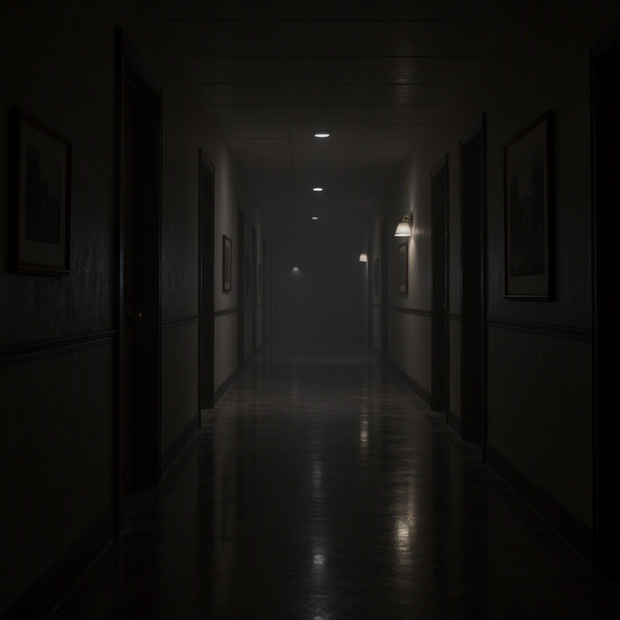
Type a prompt describing the image you want. The workflow runs MOSS-Image SFT with a banding fix LoRA that removes the faint vertical stripes the base SFT model can draw on smooth gradients and flat backgrounds. One image comes back as a PNG.
Model
MOSS-Image SFT by the OpenMOSS Team (MOSI Intelligence / Fudan University). A 5B diffusion transformer with a 9B Qwen 3.5 text encoder, strong at accurate text rendering in English and Chinese, layout control via JSON prompts, and long detailed descriptions.
HOW IT WORKS
Step 1. Write your prompt
Describe the image you want in the green Prompt box. The model handles long, detailed prompts up to 4,096 tokens and renders text in images accurately.
Works great with: scene descriptions · character art · posters with text · product mockups
Step 2. Pick a preset
The Preset selector sets the LoRA strengths and step count for you. Quality is the default and the right starting point.
Options: Quality · Quality+ · Balanced · Fast · Fast alt · Off
Step 3. Adjust settings (optional)
Change the width, height, CFG, or seed if needed. The defaults (1024 x 1024, CFG 3, random seed) work well for most prompts.
Step 4. Hit run and download
The model generates your image and saves it as a PNG. Preview it in the workflow, then download.
Ready for: Photoshop · Figma · Canva · any editor
First time? Leave every setting as-is. The defaults are the right starting point for almost everyone.
RECOMMENDED SETTINGS
Resolution
Default: 1024×1024 (1 MP).
Must be multiples of 16. Non-multiples fail outright.
Min usable: ~512 on either side. Below that, quality tanks.
Max: 2048×2048 (4 MP ceiling). Above that, OOM or artifacts.
Sweet spot: 1–2 MP.
CFG
Default: 3. Official recommendation is also 3.
Min: 1. At 0, no guidance, incoherent output.
Max practical: ~5. Above 7–8, oversaturation and burned highlights.
Safe range: 1–5.
Steps (preset-controlled)
Presets give 10, 14, or 25. Official default is 50 (for stock Euler, not ER-SDE).
Min with speed LoRA: 8. Min without: ~15. Below those, undercooked.
Max useful: ~50. Diminishing returns past that with ER-SDE.
0 steps = hard error. 1 step = noise.
Banding fix LoRA strength
Preset hardcodes 1.0. Author recommends 1.0 at 768 px, 1.5 at 1024 px.
At default 1024, slightly conservative. Bump to 1.5 if banding persists.
Min: 0 (off). Max safe: ~2.0. Above that, faces soften.
Speed LoRA strengths
Lodestones DMD: 0.28 or 0.35. Darask0 DMAD: 0.35.
Min: 0 (off). Max safe: ~0.5. Above 1.0, severe artifacts.
Sampler (ER-SDE)
s_noise: default 1.05. Stay 0.95–1.1. Below 0.8 = blurry. Above 1.3 = grainy.
eta: default 1. Range 0–1. Don’t exceed 1.
SkipLayerGuidance
Layers: “22, 24”. Start: 0.1, end: 0.7.
end_percent above 0.9 overrides prompt too hard. Below 0.05, no effect.
start_percent must be less than end_percent.
TemporalScoreRescaling
tsr_k: 0.95 (range 0–1). At 1, disabled. At 0, maximum rescaling.
tsr_sigma: keep at 1.
Seed
Any positive integer. No constraints.
Hard error triggers:
Dimensions not multiples of 16.
Width × height above 4 MP.
Steps = 0.
Blank 7th preset option selected: runs as “Off” (strength 0, 25 steps). No crash, but no banding fix.
LEARN
📹 Videos
ComfyUI 101 Free Course ft. Sebastian Kamph
Floyo 101 for Team Collaboration
✨ Quick links
USE CASES
🎨 Concept art and illustrations
Describe a scene, character, or environment and get a detailed illustration without needing a reference image.
🔤 Posters and signs with readable text
Generate images that include English or Chinese text rendered legibly, for mockups, social posts, or print-ready layouts.
🖼️ Style exploration
Lock a seed, change the prompt, and compare outputs to find the right look before committing to a direction.
📐 Layout-controlled compositions
Use a JSON layout prompt to place text and objects at specific positions in the image, for structured designs or multi-element scenes.
WHAT WORKS BEST / WHAT TO AVOID
✅ Works great
Long, specific scene descriptions with lighting, mood, and composition details
Prompts that include readable text in English or Chinese
JSON layout prompts for precise object and text placement
1024 x 1024 or higher resolutions on the Quality preset
⚠️ May produce softer results
Very short or vague prompts with no scene detail
Resolutions below 768 px on either side
Fast presets on prompts you have not tested at full quality first
Flat solid-color backgrounds without the banding fix LoRA active (use Quality or Quality+)
FAQ
What is MOSS-Image SFT?
MOSS-Image SFT is a 5-billion-parameter text-to-image model from the OpenMOSS team. It uses a diffusion transformer architecture with a 9B Qwen 3.5 text encoder. The SFT version is supervised fine-tuned on curated data for cleaner text rendering and layout accuracy compared to the base checkpoint.
What does the banding fix LoRA do?
The SFT model can produce faint vertical stripes on smooth gradients and flat-colored areas. The banding fix LoRA patches layers 37-41 of the transformer to remove those stripes. The Quality+ preset adds a second LoRA covering layers 32-36 for an even cleaner result.
Can I use MOSS-Image SFT for commercial projects?
Yes. The model weights and inference code are released under the Apache 2.0 license, which allows commercial use. Review the license file shipped with the weights before any paid production run.
Does MOSS-Image SFT support image editing or img2img?
No. This is a text-to-image model only. It takes a text prompt and generates an image from scratch. There is no image input or reference-image support.
What is the difference between Quality and Quality+ presets?
Quality applies the banding fix LoRA on layers 37-41 at 25 steps. Quality+ adds a second fix LoRA on layers 32-36, giving a cleaner result on flat backgrounds with a slightly different overall look. Both run at 25 steps.
What resolution should I use?
The default 1024 x 1024 works well for most prompts. The model supports 0.25 to 4 megapixels, with dimensions as multiples of 16. Quality drops below 768 px on either side, and going above 2048 px increases memory use significantly.
How to run MOSS-Image SFT online?
You can run MOSS-Image SFT online through Floyo. No installation, no setup, no API key to wire up. Open the workflow in your browser, type your prompt, and hit run. Free to try.
WHY FLOYO?
Floyo is the only platform with team collaboration for ComfyUI in the browser. You run workflows with no install. You share run history, assets, and models across your team. You pay only when you generate. Floyo supports open-source and closed-source models.
A designer runs a generation and likes the result. A teammate opens that exact run from shared history and keeps going. No file handoffs. No version confusion.
For studios and enterprise teams, Floyo adds private workspaces, pooled resources, and a team usage dashboard. Other ComfyUI cloud tools run for one person at a time. Floyo runs for the whole team, with transparent per-generation costs.
Ready to try it?
Type a prompt and generate your first image. The banding fix is already on.
Questions? Watch the free course or check the FAQ above.
Read more