Kling 2.6 Motion Control: Animate Images
Create an excellent for movement for your characters using Kling 2.6 Standard Motion Control
Animation
Image to Video
Kling 2.6
motion transfer
12
3.2k
Nodes & Models
Kling26StandardMotionControl_floyo
VideoToFrames
LoadVideo
LoadImage
VHS_VideoCombine
VHS_VideoCombine
VHS_VideoCombine
ABOUT THE WORKFLOW
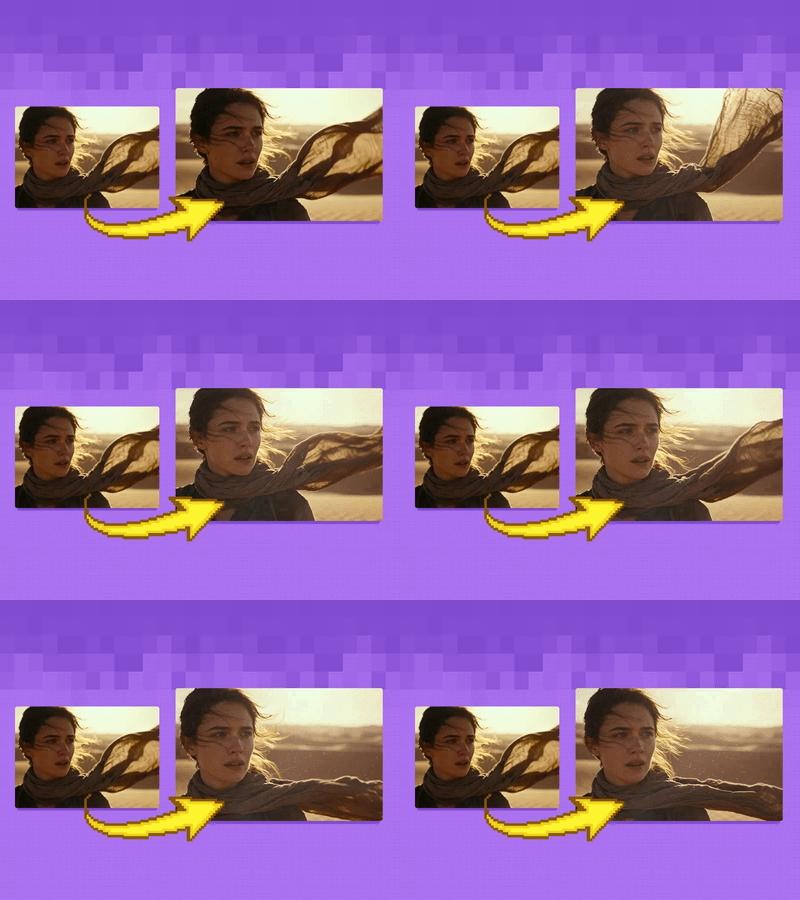
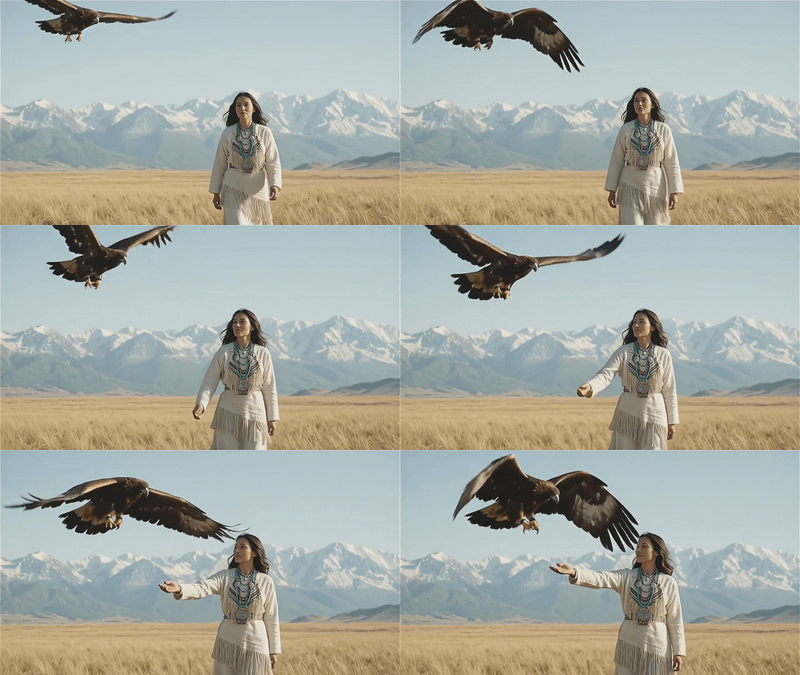
Motion Control Upload a character image and a video of the motion you want, and Kling makes your character perform that motion. That's it.
Partner node. This workflow calls an external API, so each run uses credits from your API wallet. No API key needed. Floyo handles the connection.
Model
Kling 2.6 by Kuaishou. A video model that transfers the motion from a reference video onto your character image.
HOW IT WORKS


Step 1. Upload your character image The character you want to animate. A clear full-body or upper-body shot gives the best result. Works great with: photos · illustrations · AI portraits · character art
Step 2. Upload a motion video A clip showing the movement to copy. Your character will follow it, matching the body, expression, and timing.
Step 3. Add a prompt (optional) Describe the scene or action to guide the result. The motion comes from the video, so keep the prompt light.
Step 4. Hit run and download Kling generates your character performing the motion, with their identity intact. Preview it in the workflow, then download. Ready for: Premiere · CapCut · DaVinci Resolve · any editor
First time? Leave every setting as-is. The defaults (character orientation: video · keep original sound: on) are the right starting point for almost everyone.
RECOMMENDED SETTINGS
Quick-start guide. Find the goal that matches yours and copy the settings.
Standard run (most people) ★ Start here — Character orientation: video · keep original sound: on. The right starting point for almost everyone.
Your character faces a different way than the video — Set the character orientation so your image aligns with the motion source for a cleaner transfer.
Keep the audio from the motion video — Leave keep original sound on, and the result carries the reference audio with lip sync.
Want silent footage for custom dubbing — Turn keep original sound off and add your own audio later in your editor.
Guide the scene — Add a short prompt describing the action or setting. The motion comes from the video, so a light touch is enough.
Best identity match — Use a clear, well-lit character image. Full or upper body reads better than a tight crop.
Set the length — A 3 to 30 second motion video sets the length of the generated result.
Prompt: Keep it short and optional. The movement comes from your motion video, so use the prompt only to nudge the scene or action, not to describe the motion in detail.
USE CASES
💃 Dance & Performance Make a character dance or act out a routine taken from a reference clip.
🥋 Action & Sports Transfer martial arts, workouts, or action moves onto your subject.
🎭 Character Animation Animate an illustration or an AI portrait with real human motion.
🎬 Performance Capture Reuse a recorded performance on a new character without motion-capture gear.
WHAT WORKS BEST / WHAT TO AVOID
✅ Works great
Clear, well-lit character images
Full-body or upper-body framing
Clean motion videos with one subject
Motion clips of 3 to 30 seconds
⚠️ May produce softer results
Tight crops or low-resolution character images
Crowded motion videos with many people
Extreme or fast movements
Mismatched orientation between image and video
LEARN
📹 Videos
ComfyUI 101 Free Course ft. Sebastian Kamph
Floyo 101 for Team Collaboration
✨ Quick links
FAQ
What is Kling 2.6 Motion Control? Kling 2.6 Motion Control is a video-to-video model from Kuaishou that transfers motion from a reference video onto a still character image. You give it a character and a clip of the movement you want, and it generates a video of that character performing the motion, keeping their face, clothing, and overall identity consistent. It is built for accurate motion replication rather than inventing a scene from scratch.
How does the motion transfer work and what do I need? You provide two inputs: a character image and a motion video. The model reads the movement in the video, including body dynamics, facial expression, and lip-sync, and applies it to your character frame by frame. An optional prompt can nudge the scene, but the motion itself comes entirely from the reference video.
How long can the generated video be? Up to 30 seconds. The length follows your motion video, which can run from about 3 to 30 seconds, so a longer reference clip produces a longer result. That range leaves room for full dance routines or action sequences in a single generation.
Does it keep the audio from the motion video? Yes, by default. The keep original sound option carries the reference video's audio into the result with lip sync preserved. Turn it off when you want silent footage to dub or score yourself.
What is the difference between Standard and Pro Motion Control? Standard is the standard, cost-efficient tier and is what this workflow runs. Pro is the higher-fidelity tier, with stronger detail and added prompt-based scene editing. Use Standard for most motion-transfer work, and Pro when you need the highest quality or more control over the scene.
Can I use the results commercially? Kling is a proprietary model from Kuaishou, so commercial use is governed by Kuaishou's license and terms rather than an open license. Review those terms before commercial use, and because this animates a real person's likeness, make sure you have the rights to the character image, the motion video, and any person shown in them.
How to run Kling 2.6 Motion Control online? You can run Kling 2.6 Motion Control online through Floyo. No installation, no setup, no API key to wire up. Open the workflow in your browser, upload a character image and a motion video, and hit run. Free to try.
WHY FLOYO?
Floyo is the only platform with team collaboration for ComfyUI in the browser. You run workflows with no install. You share run history, assets, and models across your team. You pay only when you generate. Floyo supports open-source and closed-source models.
A creator runs a motion transfer and likes the result. A teammate opens that exact run from shared history and keeps going. No file handoffs. No version confusion.
For studios and enterprise teams, Floyo adds private workspaces, pooled resources, and a team usage dashboard. Other ComfyUI cloud tools run for one person at a time. Floyo runs for the whole team, with transparent per-generation costs.
Ready to try it? Upload a character image and a motion video, and run it. The settings are already set.
Questions? Watch the free course or check the FAQ above.
Read more
_1758870047277.webp?width=400&height=300&quality=80&resize=contain&format=origin)