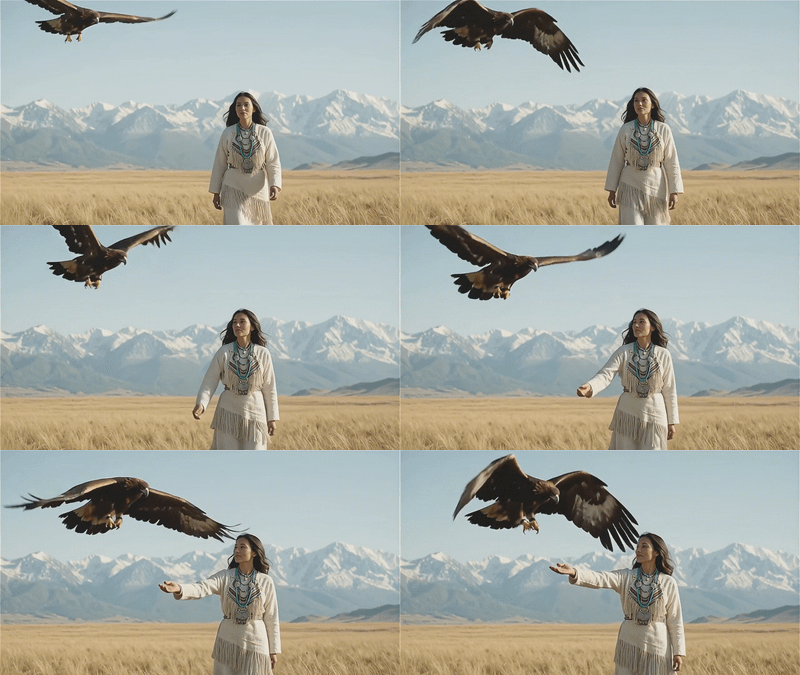
Flux Kontext · Single Image to Character LoRA Data
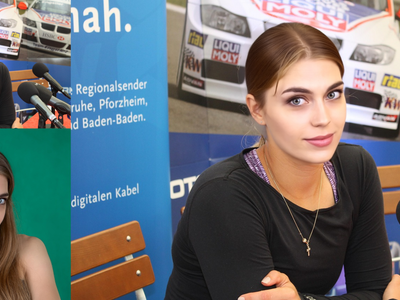
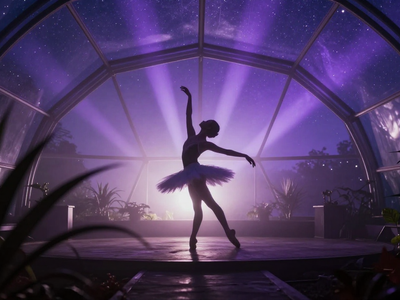
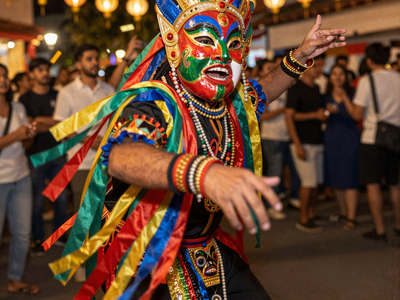
Upload a single character image and Flux Kontext generates a full multi-pose, multi-angle training dataset automatically, saving each image with a matching caption ready for LoRA training.
character consistency
dataset
flux kontext
Image
lora dataset
LoRAs
210
_1783682296345.png?width=1400&height=620&quality=80&resize=contain)
_1783682296345.png?width=1400&height=620&quality=80&resize=contain)
_1783682599105.png?width=1400&height=620&quality=80&resize=contain)
_1783682296345.png?width=104&height=104&quality=80&resize=cover)
_1783682296345.png?width=104&height=104&quality=80&resize=cover)
_1783682599105.png?width=104&height=104&quality=80&resize=cover)

Nodes & Models
LoadImage
UNETLoader
FLUX1/flux1-dev-kontext_fp8_scaled.safetensors
DualCLIPLoader
clip_l.safetensors
t5xxl_fp16.safetensors
Text Multiline
VAELoader
ae.safetensors
EmptyLatentImage
VAEEncode
ReferenceLatent
FluxKontextImageScale
SaveImage
ConditioningZeroOut
VAEDecode
FluxGuidance
CLIPTextEncode
KSampler
Text Concatenate
CR Prompt List
FloyoStickyNote
CR Prompt List
ABOUT THE WORKFLOW
Generate a LoRA Training Dataset from One Photo
Upload a single image of any character. The workflow reads a list of pose and scene descriptions and generates each variation using Flux Kontext Dev, which preserves the character's identity, face, outfit, and proportions across every output. Each image saves automatically with a matching caption file in the output folder. One reference photo in, a complete training dataset out.
Model
FLUX.1 Dev Kontext (fp8 scaled) by Black Forest Labs. A reference-conditioned image model that reads identity from an input image and generates new views while preserving the character's face, clothing, and proportions across diverse poses, angles, and settings.
HOW IT WORKS
Step 1. Upload your character reference image
One clear photo, illustration, or render of the character you want to train a LoRA on. The Kontext model locks the character's visual identity from this image and carries it into every generated view.
Works great with: portrait photos · character illustrations · anime designs · AI-generated characters · product shots
Step 2. Set the character name (output folder)
Enter a name for the output folder. All images and caption files save here. This name also becomes the organizational prefix for the dataset.
Step 3. Edit the scene list (optional)
The default list covers 10+ views: city front-facing, park bench side view, forest trail rear view, beach run, wall lean, classroom slouch, rain umbrella, rooftop silhouette, alley low-angle, and more. Edit or add lines to match your target use case. Each line generates one training image.
Step 4. Hit run
Flux Kontext generates each scene in sequence at 1024x1024 in 20 steps. Each output saves as a PNG with a matching TXT caption file.
Step 5. Use the dataset for LoRA training
Take the saved image and caption pairs and feed them into any LoRA trainer.
Ready for: Kohya SS · SimpleTuner · Comfy LoRA trainers · FLUX LoRA training pipelines
First time? Upload your character image, set a folder name, and hit run. The default scene list generates a usable starting dataset.
RECOMMENDED SETTINGS
Quick-start guide. Find the goal that matches yours and copy the settings.
Standard character dataset — 1024x1024, 20 steps, FluxGuidance 2.5, seed randomized. Upload your reference image, set the folder name, and run with the default scene list.
More diverse dataset — Add more lines to the scene list. Cover the full range: front, back, left, right, three-quarter, low angle, high angle, close-up, full body, action pose, seated, walking. The more diverse the views, the more generalizable the trained LoRA.
Consistent visual style across all views — Add a style prefix in the prepend_text field. "Anime style, cel shading" at the start of every prompt keeps every generated image in the same aesthetic.
Stronger character preservation — Lower the FluxGuidance below 2.5. The model stays closer to the reference image at lower values. Higher values allow more creative interpretation.
Non-photorealistic characters — Flux Kontext handles illustrated characters, anime designs, and 3D renders as well as photographs. Upload the illustration and write scene descriptions that match the character's style.
Reproduce the same variation — The seed is randomized by default. Set it to a fixed value to reproduce a specific output when refining a particular scene description.
Prompt: Write each scene description as a plain instruction starting with "make this character." "Make this character stand upright in a city, arms relaxed at sides, neutral expression, full body, front view" is specific about pose, setting, expression, and camera. "Character in city" produces generic results.
LEARN
📹 Videos
ComfyUI 101 Free Course ft. Sebastian Kamph
Floyo 101 for Team Collaboration
✨ Quick links
USE CASES
👤 Character LoRA from a Single Photo
Generate a full training dataset from one portrait or character image, covering 15 to 30 views with diverse poses, settings, and angles, without a photoshoot or manual illustration.
🎮 Game and VTuber Character Datasets
Build a dataset for a game character, VTuber avatar, or original character from a single reference design, covering the full range of views needed for a generalist character LoRA.
📸 Personal Portrait LoRA
Upload a photo of a person and generate a diverse set of that person in different environments and poses for a personal AI avatar or portrait LoRA.
🎨 Concept Art to Training Data
Turn a single piece of concept art into a multi-angle character dataset. Flux Kontext preserves the illustrated style across all generated views.
WHAT WORKS BEST / WHAT TO AVOID
✅ Works great
Clear, well-lit reference images with visible face, outfit, and body
15 to 30 diverse scene descriptions covering multiple angles, poses, and settings
Each description specifying pose, setting, expression, and camera angle
Both photorealistic and illustrated character references
⚠️ May produce softer results
Reference images with extreme angles or heavy occlusion around the face
Scene descriptions with no pose or camera direction (too vague for consistent output)
Very short scene lists (fewer than 10 views produce limited training diversity)
Identical or near-identical scene descriptions that produce redundant training images
FAQ
What is Flux Kontext and why is it good for dataset generation?
Flux Kontext is a variant of FLUX.1 Dev that accepts a reference image and a text prompt. It reads the character's visual identity from the reference and generates new views that preserve the face, outfit, and proportions while following the scene description. This makes it ideal for dataset generation: one reference image produces many consistent training views without manual illustration or photography.
How many training images do I need for a character LoRA?
Most FLUX LoRA trainers produce strong results with 15 to 30 images for a character concept. Fewer than 10 may underfit. More than 50 with redundant views can overfit. Prioritize diversity: different angles, expressions, lighting, and settings over quantity.
How is this different from the Qwen Image Edit LoRA dataset workflow?
Both workflows generate multi-view training datasets from a single reference image. The Qwen workflow uses Qwen Image Edit 2509 with an anime illustration LoRA and generates image-caption pairs in anime style. This workflow uses Flux Kontext Dev, which handles photorealistic and stylized characters without a style-specific LoRA, producing outputs in a broader range of aesthetics.
Do I need to write a trigger word into the captions?
The caption files save the scene description text. Add your trigger word to the prepend_text or append_text field to include it in every caption automatically. For example, "TOK character, " at the start of every caption associates the trigger with the character across the full dataset.
Is FLUX.1 Dev Kontext licensed for commercial use?
FLUX.1 Dev Kontext is released under the FLUX.1 Dev Non-Commercial License for open-weight users. For commercial use, Black Forest Labs offers a separate Self-Hosted Commercial License. Check the current licensing terms on the Black Forest Labs site for your use case.
How to run character LoRA dataset generation online?
You can run character LoRA dataset generation online through Floyo. No installation, no setup, no local GPU needed. Open the workflow in your browser, upload your reference image, and hit run. Free to try.
WHY FLOYO?
Floyo is the only platform with team collaboration for ComfyUI in the browser. You run workflows with no install. You share run history, assets, and models across your team. You pay only when you generate. Floyo supports open-source and closed-source models.
A designer runs an edit and likes the result. A teammate opens that exact run from shared history and keeps going. No file handoffs. No version confusion.
For studios and enterprise teams, Floyo adds private workspaces, pooled resources, and a team usage dashboard. Other ComfyUI cloud tools run for one person at a time. Floyo runs for the whole team, with transparent per-generation costs.
Ready to try it?
Upload your character image, set the output folder name, and hit run. The default scene list generates your first dataset.
Questions? Watch the free course or check the FAQ above.
Read more
_1786518453053.png?width=400&height=300&quality=80&resize=cover)