Boogu Edit · Image to Image
Edit any image with a text instruction using Boogu-Image-0.1-Edit, a 10B open-source model. Upload a photo, describe the change, and hit run.
Image
image editing
image to image
style transfer
175
_1783925218218.png?width=1400&height=620&quality=80&resize=contain)
_1783925218218.png?width=1400&height=620&quality=80&resize=contain)
_1783925218218.png?width=1400&height=620&quality=80&resize=contain)
_1783925218218.png?width=104&height=104&quality=80&resize=cover)
_1783925218218.png?width=104&height=104&quality=80&resize=cover)
_1783925218218.png?width=104&height=104&quality=80&resize=cover)
Nodes & Models
LoadImage
UNETLoader
boogu_image_edit_fp8_scaled.safetensors
VAELoader
flux1_vae_bf16.safetensors
EmptyLatentImage
CLIPLoader
qwen3vl_8b_fp8_scaled.safetensors
KSamplerSelect
TextEncodeBooguEdit
ModelSamplingAuraFlow
PreviewImage
BasicScheduler
VAEDecode
SamplerCustom
FloyoStickyNote
ABOUT THE WORKFLOW
Edit an Image
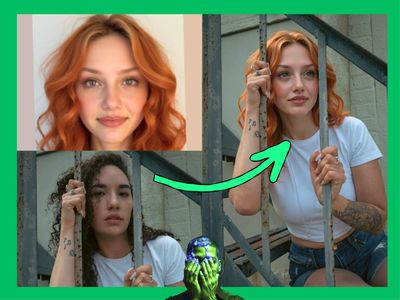
Upload a photo, describe the change you want, and get an edited version that keeps the original composition intact. Add a second reference image to guide the look. That's it.
Model
Boogu-Image-0.1-Edit by the Boogu Team. A 10B parameter open-source image editor (Apache-2.0) that rewrites appearance, lighting, materials, and style while preserving the subject, pose, and layout of the original.
HOW IT WORKS
Step 1. Upload your image
The photo you want to edit. Any resolution works, but the model is most stable at 1K.
Works great with: photos · portraits · product shots · illustrations
Step 2. Describe the change
Write a clear instruction: "replace the warm light with blue light" or "turn the background into a snowy landscape." Say what to change and what to keep.
Step 3. Add a second image (optional)
Upload a reference image to steer the edit toward a specific look, texture, or color palette.
Step 4. Hit run and download
Boogu Edit applies your instruction and returns the result. Preview it in the workflow, then download.
Ready for: Photoshop · Figma · Canva · any editor
First time? Leave every setting as-is. The defaults (1024×1024 · 25 steps · 3.5 guidance) are the right starting point for almost everyone.
RECOMMENDED SETTINGS
Quick-start guide. Find the goal that matches yours and copy the settings.
Standard edit (most people) — 1024×1024 · 25 steps · 3.5 guidance · fixed seed. The right starting point for almost everyone.
Want a faster preview — Lower steps to 15. The result will be rougher, but you will know in half the time if the edit is going the right direction.
Want stronger edits — Raise guidance above 3.5. Higher values push the model to follow your instruction more aggressively. Start at 5 and work up.
Want subtle edits — Lower guidance to 2. The model will make softer changes and stay closer to the original.
Want to compare variations — Change the seed to random. Each seed produces a different interpretation of the same instruction.
The edit is not landing — Keep the prompt specific about what to change. "Replace the warm light with blue light" works better than "make the lighting different."
Need a different output size — Change width and height. The model supports multiple aspect ratios (1:1, 2:3, 3:2, 3:4, 4:3, 16:9, 9:16) and resolutions up to 2K. Results are most stable at 1K.
Prompt: Describe the edit as a direct instruction. Be specific about what changes and what stays. "Turn the jacket red, keep the pose and background" is clearer than "make it look different." One clear instruction per run works best.
LEARN
📹 Videos
ComfyUI 101 Free Course ft. Sebastian Kamph
Floyo 101 for Team Collaboration
✨ Quick links
USE CASES
🎨 Lighting and Color Edits
Change the time of day, color temperature, or lighting setup in a photo without reshooting.
👗 Material and Style Changes
Swap textures, fabrics, or surface materials on an object. Turn leather to denim, wood to marble, or rewrite the art style entirely.
🖼️ Background and Environment Edits
Replace or transform the background of a shot while keeping the subject locked in place.
📝 Bilingual Text Rendering
Add or edit legible text in English or Chinese directly in the image. The model handles typography better than most open-source alternatives.
🛍️ Product Shot Adjustments
Restyle product images for different campaigns, seasons, or color variants from a single source photo.
WHAT WORKS BEST / WHAT TO AVOID
✅ Works great
Clear, single-instruction edits
Lighting, color, and material changes
Style and mood transformations
Photos with a single well-defined subject
⚠️ May produce softer results
Vague instructions like "make it look better"
Edits that require real-world knowledge (specific landmarks, celebrities, branded products)
Major structural or viewpoint changes
Heavy multi-part edits in one prompt
FAQ
What is Boogu-Image-0.1-Edit?
Boogu-Image-0.1-Edit is a 10B parameter open-source image editing model by the Boogu Team, released under the Apache-2.0 license. It takes a photo and a text instruction and rewrites appearance, lighting, materials, or style while preserving the composition. It uses a unified understanding-and-generation architecture with a Qwen3VL text encoder.
How does Boogu Edit compare to other open-source image editing models?
Boogu-Image-0.1-Edit scored the highest on the ImgEdit_O benchmark among all models tested, including closed-source systems. It is strong at single-image instruction-driven edits like relighting, material swaps, and style changes. For tasks requiring real-world knowledge of specific places or people, the team notes it still lags behind closed-source systems like Nano Banana Pro and GPT-Image-2.
Can Boogu Edit preserve the original composition of an image?
Yes. The model is designed to follow your edit instruction while keeping the subject, pose, and layout of the original photo intact. It works best with clear, targeted instructions that specify what to change and what to leave alone. However, the team notes that image-to-image consistency for strict preservation of fine details is still an area of active improvement.
What resolution should I use with Boogu Edit?
The model supports resolutions up to 2K across multiple aspect ratios (1:1, 2:3, 3:2, 3:4, 4:3, 16:9, 9:16). Results are most stable at 1K (1024×1024). Use 1K for most edits and step up to 1.5K or 2K only when you need the extra detail in the final output.
Is Boogu-Image-0.1-Edit free to use commercially?
Yes. Boogu-Image-0.1-Edit is released under the Apache-2.0 license, which allows commercial use, modification, and redistribution. You can use the outputs in client work, published content, and commercial products.
What is the second image input for?
The second image input lets you provide a reference to steer the edit. Upload a photo with a specific color palette, texture, or style, and the model uses it as a visual guide alongside your text instruction. It is optional. Leave it empty if your text prompt is enough to describe the change.
How to run Boogu Edit online?
You can run Boogu Edit online through Floyo. No installation, no setup, no API key to wire up. Open the workflow in your browser, upload your inputs, and hit run. Free to try.
WHY FLOYO?
Floyo is the only platform with team collaboration for ComfyUI in the browser. You run workflows with no install. You share run history, assets, and models across your team. You pay only when you generate. Floyo supports open-source and closed-source models.
A designer runs an edit and likes the result. A teammate opens that exact run from shared history and keeps going. No file handoffs. No version confusion.
For studios and enterprise teams, Floyo adds private workspaces, pooled resources, and a team usage dashboard. Other ComfyUI cloud tools run for one person at a time. Floyo runs for the whole team, with transparent per-generation costs.
Ready to try it?
Upload an image, describe the change, and run it. The settings are already set.
Questions? Watch the free course or check the FAQ above.
Read more