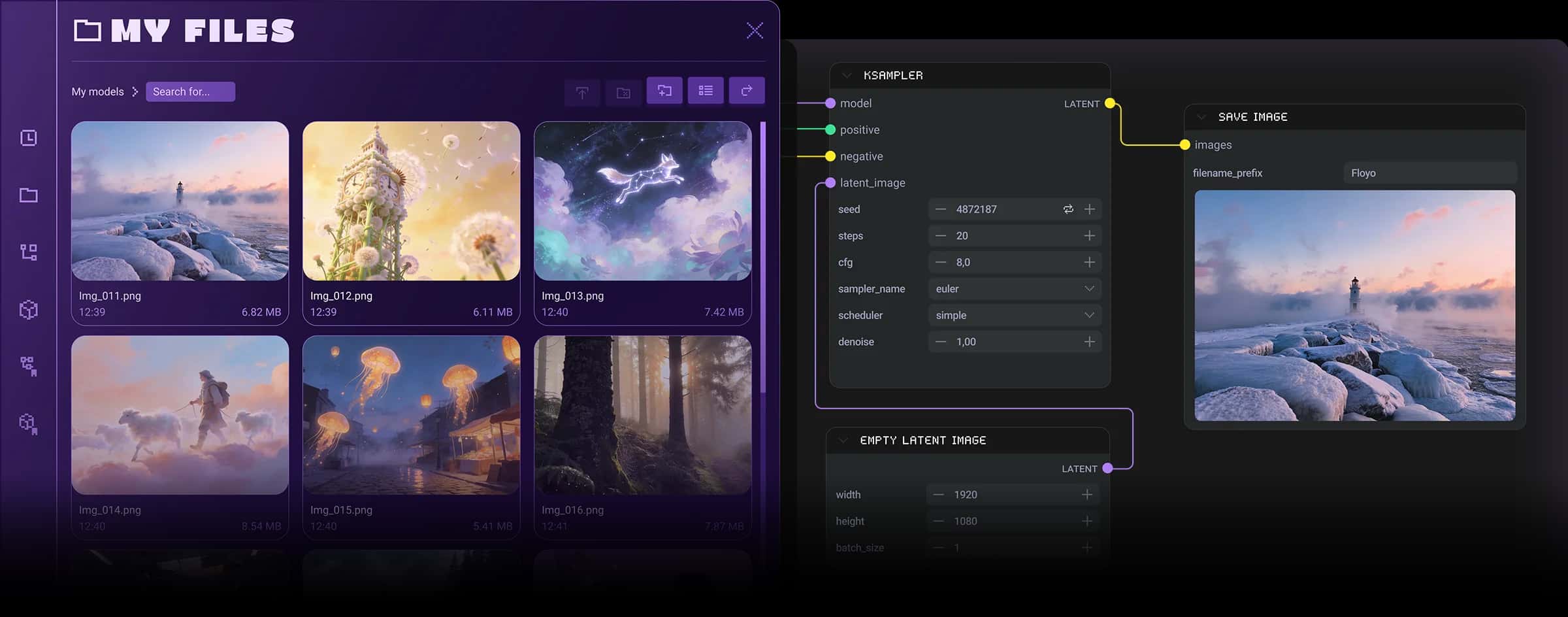
The ComfyUI Wrapper for Microsoft Trellis.2 enhances the ComfyUI framework by integrating structured latent representations specifically designed for 3D model generation. This tool enables users to leverage advanced techniques for creating detailed and complex 3D visuals efficiently.
- Provides a variety of nodes for mesh processing, including texturing, smoothing, and hole filling.
- Supports multi-view generation, allowing for comprehensive 3D model output from various angles.
- Integrates seamlessly with models like Pixal3D and DINO-V3, expanding the capabilities of 3D rendering in ComfyUI.
Context
This tool serves as a bridge between ComfyUI and Microsoft’s TRELLIS.2, which is focused on generating native and compact structured latents for 3D applications. It aims to enhance the user experience in 3D generation workflows by providing a set of specialized nodes that facilitate the creation and manipulation of 3D models.
Key Features & Benefits
The ComfyUI Wrapper includes practical features such as mesh texturing, multi-view rendering, and advanced mesh processing nodes. These functionalities are essential for artists and developers looking to produce high-quality 3D models, as they streamline the workflow and allow for greater control over the final output.
Advanced Functionalities
This wrapper introduces advanced capabilities like the Sparse MultiView Generator and the Mesh with Voxel Cascade Generator, which allow for intricate detail management in 3D models. It also supports the integration of various models, enhancing the versatility of the tool in different project contexts.
Practical Benefits
By utilizing this tool, users can significantly improve their workflow efficiency in ComfyUI, gaining enhanced control over the 3D generation process. The ability to easily manipulate meshes and generate multi-view outputs leads to higher quality results and reduced time spent on model refinement.
Credits/Acknowledgments
This tool is developed by contributors within the community, with significant input from the Discord community. Acknowledgments are also given to the original authors of the TRELLIS.2 project and related dependencies, which are crucial for the tool's functionality.