

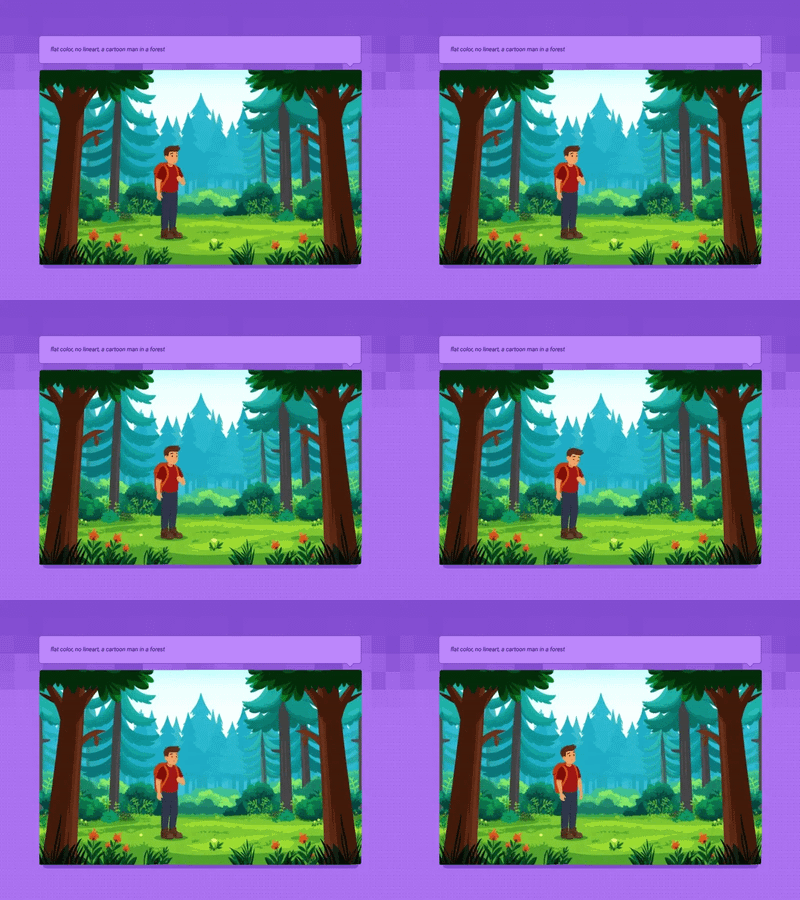
A custom node set designed for Video Frame Interpolation within ComfyUI, this tool enhances video processing capabilities by allowing users to create intermediate frames between existing ones. It optimizes memory usage and introduces advanced scheduling options for improved performance.
- Supports a variety of interpolation methods, providing users with flexibility in choosing the best approach for their specific needs.
- Enhanced memory management reduces the demand for RAM and VRAM, making it more efficient for users with limited resources.
- Integration with existing ComfyUI functionalities, such as advanced control and video helper tools, streamlines the workflow for video frame interpolation.
Context
This tool, known as ComfyUI Frame Interpolation (ComfyUI VFI), serves as an extension for ComfyUI, focusing on the interpolation of video frames. Its primary purpose is to generate smooth transitions between frames in video sequences, which is particularly useful in animation and video editing tasks.
Key Features & Benefits
The tool includes a range of nodes that offer various interpolation techniques, such as GMFSS Fortuna, IFRNet, and RIFE, among others. Each node is designed to cater to different interpolation requirements, enabling users to select the most suitable method based on the characteristics of their video content.
Advanced Functionalities
ComfyUI VFI provides advanced features such as scheduling multipliers for frame generation, allowing for precise control over the interpolation process. Additionally, it supports a non-CUDA device option using Taichi, making it accessible for users without NVIDIA graphics cards, although this feature is still experimental.
Practical Benefits
By improving memory management and offering a diverse set of interpolation nodes, this tool enhances the efficiency and quality of video frame interpolation in ComfyUI. Users can expect better control over their workflows and the ability to handle larger video files without running into memory issues.
Credits/Acknowledgments
The development of this tool draws significantly from the work of styler00dollar and various contributors for the individual VFI nodes, with their respective codebases and research papers cited for reference. The tool is released under an open-source license, promoting community collaboration and further enhancements.





_1764582642632.webp?width=400&height=300&quality=80&resize=contain&format=origin)