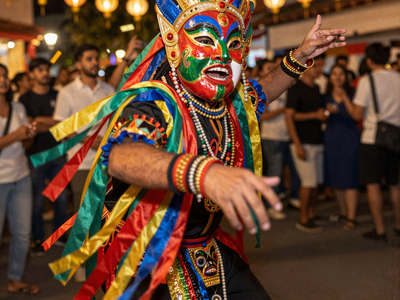
Seedream 4.0 Edit: Unleash Creativity of Editing
Seedream
API
Floyo API
Image
Image2Image
Seedream Edit
1.8k










Nodes & Models
Seedream4Unified_floyo
LoadImage
SaveImage
PreviewImage
Seedream 4.0 image editing with reference control. Upload a photo, describe what to build or change, get a result.
This is a ByteDance cloud API workflow. No local model weights, no sampler settings to tune. One node handles everything. The same model that generates images from scratch also edits them with reference images attached, so structural edits that would require multiple steps in other workflows happen in a single pass here.
The default prompt that ships with this workflow shows what the range looks like: upload a character photo, describe an anime figure version of them placed on a desk with a themed gift box and book, and the model constructs the entire scene while keeping the photographic style of the original. That's a multi-element construction task in one prompt.
How do you use Seedream 4.0 for image editing?
Upload a reference image, write a prompt describing what to change or construct, set your resolution, and run. Seedream 4.0 reads the reference for character, style, and scene context, then applies your instruction. The model supports up to 2 reference images and follows long, detailed prompts accurately.
All defaults are already set up. Most runs only need two things: a reference image and a prompt.
Reference images (image1 and image2) Connect your primary reference to image1. A second optional reference goes to image2. The model reads them for different purposes depending on your prompt. One can anchor the character, the other can anchor the style or setting. Keep references clean and well-lit for the tightest identity lock. The more recognizable the subject, the more consistent the output.
Prompt The single most important input. Seedream 4.0 follows long, detailed instructions well. The default prompt runs to four sentences and specifies subject, placement, secondary objects, scene context, framing, and style direction. That level of specificity is not excessive. The model honors it.
Tips for writing prompts that work: Describe what to add or change, not what to keep. Keeping things unchanged is the model's default. For object placement, specify position explicitly: "on the left side," "in the foreground." For style consistency with the reference, say so directly: "maintain the style of the reference image." For text editing, state the exact existing text and the replacement text. For scene construction, describe each element you want built into the scene.
Width / Height (default: 2048 x 2048) 2048x2048 is the default. For portrait or landscape outputs, adjust to your target aspect ratio. The default prompt tells the model to match the size of the original image, so if you change dimensions, check whether that instruction still applies.
Size preset Set to custom by default, which reads the width and height values directly. Switch to a named preset (1080p, 2K, 4K) for standardized output.
Optimize prompt mode (default: standard) When active, the model rewrites your prompt before generation to improve output quality. Standard works for most edits. For precise, tightly-worded prompts where exact instruction-following matters, watch whether optimization is shifting your intent. If the model drifts from a specific instruction, try disabling it.
Batch size (default: 1) One output per run. Increase when you're generating variations or building a set. Switch batch mode to batch when you have multiple reference images and need multiple outputs in one pass.
What is Seedream 4.0 image editing good for?
Seedream 4.0 handles edits where a reference image needs to become something structurally different: a character turned into merchandise, a scene re-lit, a poster with updated text, an object removed cleanly. The unified generation-and-editing architecture handles large structural changes, not small prompt-based tweaks.
Here's where it performs best:
Character-to-product generation. Take a character photo and describe merchandise, figures, or branded assets built around them. The model maintains facial consistency and style across the constructed output.
Text editing in images. Change specific text strings in posters, signs, and UI mockups while preserving font, color, and layout. Specify the exact existing text and the replacement text. The model executes this accurately.
Scene lighting and atmosphere. "Turn on the lights in this room" or "make it evening outside" are the kinds of contextual instructions Seedream 4.0 follows correctly. It understands what changing light sources means for a scene.
Object removal. Single-sentence removals produce clean fills. The model infers what should be behind the removed subject.
Style transfer with reference anchoring. Feed a style reference and a subject reference, describe the blend you want, and the model holds the texture, palette, and mood from the style reference while preserving the subject from the other.
Honest notes: Seedream 4.0 applies content filtering that some users find stricter than expected on edge cases. It's a cloud API, so speed and availability depend on ByteDance's infrastructure. Some users find Seedream 4.5 stronger for pure photorealism. Seedream 4.0's advantage is in the breadth of editing instructions it follows and the quality of its reference-based scene construction.
How does Seedream 4.0 compare to other image editing models?
Seedream 4.0's main advantage over diffusion-based editors is its unified generation-and-editing architecture. The same model handles creation and structural editing in one pass, with strong natural-language understanding and reference anchoring. For complex multi-element edits from a reference, it's ahead of most alternatives.
Most image editors handle small prompt-based adjustments well. Recoloring, minor retouching, background swaps. Seedream 4.0's strength is structural edits: taking a reference and building an entirely different scene from it while preserving identity.
Seedream 4.5 produces stronger raw photorealism in community comparisons. If your goal is pure photo quality over editing flexibility, 4.5 is worth testing. Seedream 5.0 Lite adds support for up to 14 reference images and improved text rendering, but some users find a step back in overall image realism compared to 4.5.
For reference-guided scene construction and text editing tasks, 4.0 remains a strong starting point.
FAQ
Can Seedream 4.0 edit text inside images?
Yes, and it's one of its strengths. Specify the exact existing text, the replacement text, and what to preserve (font, color, layout). Works on posters, signs, and UI mockups. The model executes precise string replacements without breaking the surrounding design.
How does Seedream 4.0 handle complex scene construction from a single reference?
Well. The default prompt in this workflow demonstrates it: one character photo in, one fully constructed product scene out. Describe each element, their positions, and the style you want. The model follows multi-element instructions in a single pass without separate steps per object.
Is Seedream 4.0 a local model or a cloud API?
Cloud API from ByteDance's ModelArk platform. There's no local model to download or VRAM to manage. The ComfyUI node sends your inputs to the API and returns the result. You pay per run, not per GPU hour.
How does Seedream 4.0 compare to Seedream 4.5 and 5.0 Lite?
4.0 is strongest for editing instruction-following and reference-based scene construction. Community feedback puts 4.5 higher for raw photorealistic quality. 5.0 Lite adds multi-reference support up to 14 images and improved text rendering, but some users find it a step down from 4.5 in overall image realism.
What's the best way to prompt Seedream 4.0 for edits?
Describe what to add or change, not what to keep. Be specific about placement ("on the left," "in the foreground"). For style consistency, say it directly. For text changes, state the exact existing string and the replacement. Four-sentence prompts that cover subject, placement, objects, and style direction work well.
How do I run Seedream 4.0 image editing online?
You can run Seedream 4.0 online through Floyo. No installation, no setup. Open the workflow in your browser, upload your reference image, and hit run. Free to try.
Read more