Reve 2.1 · Text to Image
Reve 2.1 is Reve AI's layout-first model that plans an image, then renders it in native 4K with legible text. Type a prompt and run, no upscaling needed.
4k image generator
reve 2.1
text to image
148





Nodes & Models
Reve21TextToImage_floyo
FloyoStickyNote
SaveImage
ABOUT THE WORKFLOW
Type a prompt, get 4K
Type a prompt and the model plans the image as a structured layout, placing each object and word, then renders it at native 4K. It handles in-image text well, so headlines, labels, and signage come out legible. No upscaling step needed.
Partner node. This workflow calls an external API, so each run uses credits from your API wallet. No API key needed. Floyo handles the connection.
Model
Reve 2.1 by Reve AI. A layout-first text-to-image model, ranked #2 on the Text-to-Image Arena, that plans each image as an editable layout before rendering it at native 4K. It is strong at prompt adherence, layout control, and readable in-image text, which suits design and marketing work.
HOW IT WORKS
Step 1. Write your prompt
Describe the image, and be specific about layout, composition, and where elements sit. Spell out any text you want, exactly as it should read.
Works great with: posters · packaging · marketing assets · signage
Step 2. Hit run
The model plans the layout, then renders it at native 4K in one pass.
Step 3. Download your image
The result saves as a 4K PNG, ready to use without an upscaling step.
Ready for: print · Photoshop · Figma · Canva
First time? Leave every setting as-is. The defaults (16:9 · 1 image · PNG) are the right starting point for almost everyone.
RECOMMENDED SETTINGS
Quick-start guide. Find the goal that matches yours and copy the settings.
Standard use (most people) — 16:9, 1 image, PNG. The right starting point for almost everyone.
Designing for a format — pick the aspect ratio that matches, from 1:1 for social to 9:16 for stories to 4:1 for a wide banner.
Want options to choose from — raise the number of images to generate several and keep the strongest. Each one is another generation and adds to the cost.
Making a poster or packaging — describe the composition in full: foreground, background, and where each element and line of text sits.
Getting text exactly right — spell out the words in quotes, exactly as they should appear. The model places text faithfully.
Need a different file type — switch the output format to match where the image is going.
Prompt: Reve 2.1 plans a layout before it renders, so specific, structured prompts pay off. Name the composition and where things sit, like "a movie poster, title 'NIGHTFALL' across the top, a lone figure centered, city skyline behind." Put any in-image words in quotes so they render exactly.
LEARN
📹 Videos
ComfyUI 101 Free Course ft. Sebastian Kamph
Floyo 101 for Team Collaboration
✨ Quick links
USE CASES
🖼️ Posters & Print
Design publish-ready posters and print pieces at native 4K.
📦 Packaging & Labels
Lay out packaging with legible product text and placement.
📣 Marketing Assets
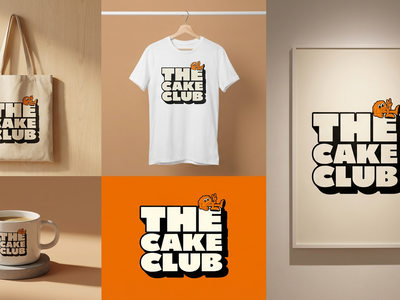
Generate ads and social graphics with headlines that read as type.
🔤 In-image Typography
Render multilingual text and signage that stays legible.
WHAT WORKS BEST / WHAT TO AVOID
✅ Works great
Detailed prompts with a clear layout
In-image text spelled out exactly
Design and marketing compositions
Work that needs native 4K
⚠️ May produce softer results
Photoreal faces and hands
Vague prompts with no composition
Long, dense passages of small text
Portrait realism that rivals dedicated face models
FAQ
What is Reve 2.1?
Reve 2.1 is a layout-first text-to-image model from Reve AI, released on July 9, 2026. Instead of going straight from prompt to pixels, it plans each image as an editable layout, giving every object and word a position, then renders that plan at native 4K. It ranks #2 on the Text-to-Image Arena at 1306 Elo and is built for prompt adherence, layout control, and readable text.
What makes Reve 2.1 different from other image models?
Reve 2.1 separates planning from rendering. It first builds the image as a structured, editable layout of regions, objects, and text, then renders it at 4K, where most models go straight from a sentence to pixels in one pass. That layout-first approach is what gives it tight prompt adherence and legible in-image text, and it means you can direct where each element sits.
Does Reve 2.1 render text well?
Yes. In-image text is one of its strengths, with legible headlines, packaging copy, signage, and multilingual text that stays correctly placed. Put the exact words in quotes in your prompt, and the model renders them as type rather than smudged shapes, which is where many image models struggle.
What resolution does Reve 2.1 output?
Reve 2.1 renders at native 4K, up to 4096 by 4096, with no separate upscaling step in the loop. Because nothing is upscaled after the fact, the detail holds up for print, large format, and close client review straight out of the workflow.
How does Reve 2.1 compare to GPT Image 2 or Nano Banana 2?
On the Text-to-Image Arena, Reve 2.1 sits at #2, right behind GPT Image 2 and ahead of Nano Banana 2. Its edge is layout control, in-image text, and design work at 4K, while dedicated portrait models still tend to lead on photoreal faces and hands. Pick Reve for typography and composition-heavy pieces, and a portrait model when realism of people is the priority.
Can I use Reve 2.1 images commercially?
Reve 2.1 is a proprietary Reve AI model accessed through its API and plans, so commercial use is supported under Reve's plan terms rather than an open license. Review Reve's current terms for your plan, and make sure you hold the rights to anything you describe or reference in a prompt.
How to run Reve 2.1 online?
You can run Reve 2.1 online through Floyo. No installation, no setup, no API key to wire up. Open the workflow in your browser, type a prompt, and hit run. Free to try.
WHY FLOYO?
Floyo is the only platform with team collaboration for ComfyUI in the browser. You run workflows with no install. You share run history, assets, and models across your team. You pay only when you generate. Floyo supports open-source and closed-source models.
A designer generates a poster and likes it. A teammate opens that exact run from shared history and keeps going. No file handoffs. No version confusion.
For studios and enterprise teams, Floyo adds private workspaces, pooled resources, and a team usage dashboard. Other ComfyUI cloud tools run for one person at a time. Floyo runs for the whole team, with transparent per-generation costs.
Ready to try it?
Type a prompt and run it. You get a native 4K image.
Questions? Watch the free course or check the FAQ above.
Read more


_1756358901929.png?width=400&height=300&quality=80&resize=cover)