Nano Banana 2.1 for Image Editing
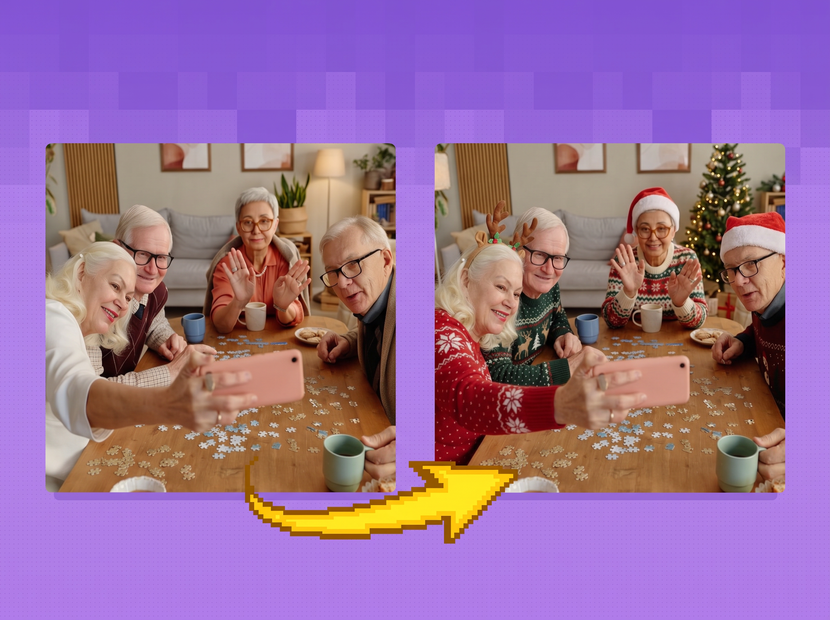
Edit any image with a text instruction using Nano Banana 2.1, Google DeepMind’s latest image model. Upload an image, describe the change, add optional references, and hit run.
Image
Image Editing
Nano Banana 2.1
121


ABOUT THE WORKFLOW
Edit an Image
Upload an image and describe the edit you want. Nano Banana 2.1 applies the change and returns the result. Add reference images, video, or a PDF to give the model more context. That’s it.
Partner node. This workflow calls an external API, so each run uses credits from your API wallet. No API key needed. Floyo handles the connection.
Model
Nano Banana 2.1 by Google DeepMind. Succeeds Nano Banana 2. Strong at preserving what you did not ask to change and rendering readable text in images. Accepts up to 14 images, video, and PDF as input.
HOW IT WORKS
Step 1. Upload your image
The image you want to edit. Any photo, render, or design works.
Works great with: photos · portraits · products · designs · screenshots
Step 2. Describe the change
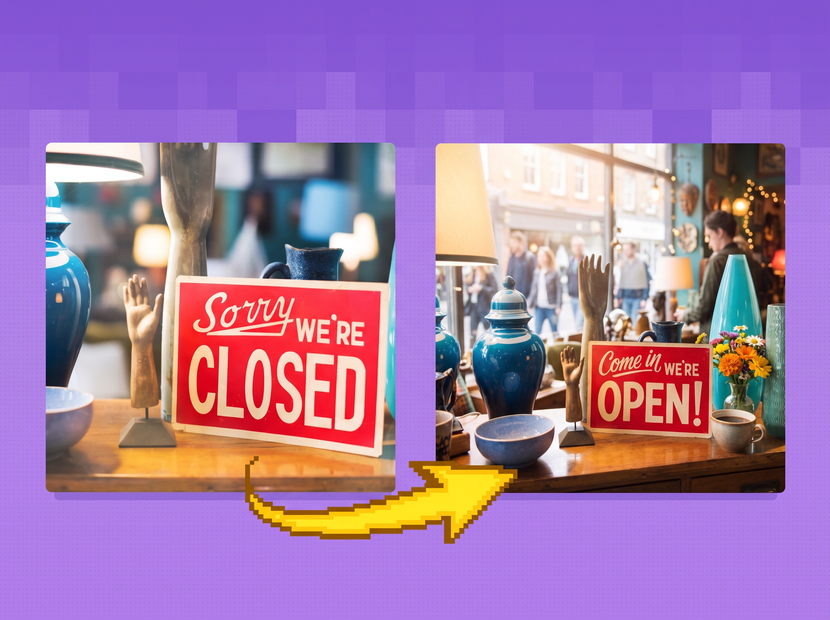
Say what to change in plain language, like “swap the background to a rooftop at golden hour” or “add the text SALE 50% OFF to the banner.”
Step 3. Add references (optional)
Add a second image to guide the edit, such as a style to match or an object to bring in. You can also attach a video or PDF for extra context. All optional, all turned off by default.
Step 4. Hit run and download
Nano Banana 2.1 applies the edit and returns the result. Preview it in the workflow, then download.
Ready for: Photoshop · Figma · Canva · any editor
First time? Leave every setting as-is. The defaults (1 image · 1K · PNG · medium thinking) are the right starting point for almost everyone.
RECOMMENDED SETTINGS
Quick-start guide. Find the goal that matches yours and copy the settings.
Standard edit (most people) — 1 image · 1K · PNG · medium thinking. The right starting point for almost everyone.
Want sharper output — Switch resolution to 2K or 4K. Higher resolution costs more per run.
Want options to choose from — Raise the number of images to generate several edited versions and keep the strongest.
Guide the edit with references — Turn on the second image loader and upload a style reference, object, or look to match. The model supports up to 14 reference images total.
Give the model video or document context — Turn on the video or PDF input to feed in additional context for the edit. Useful when the change depends on information outside the image itself.
Need the model to think harder — Switch thinking level to high for complex edits. Use minimal for fast, straightforward changes.
Editing or adding text — Nano Banana 2.1 renders text accurately. Spell out the exact words you want in the image.
The edit is not landing — Keep the prompt specific about what to change and what to keep. Break complex multi-step edits into separate runs.
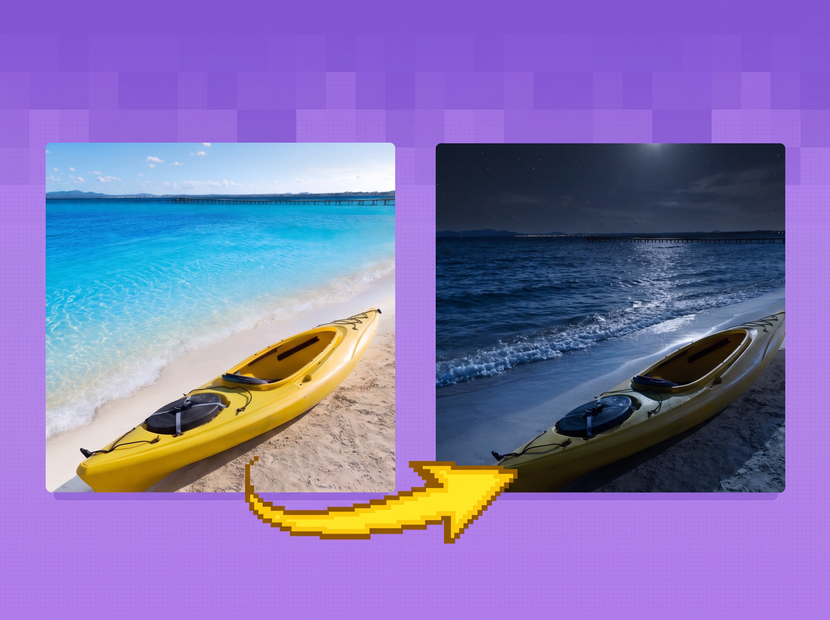
Prompt: Describe the change and what to preserve. “Change the background to a beach at sunset, keep the subject and lighting” is clearer than “make it look tropical.” When you add references, say what each one contributes to the edit.
Web search: Off by default. Turn it on when your edit references a real place, brand, or object and you want the model to look up how it looks.
LEARN
📹 Videos
ComfyUI 101 Free Course ft. Sebastian Kamph
Floyo 101 for Team Collaboration
✨ Quick links
USE CASES
🎨 Style Changes
Restyle a photo into a new art style or visual treatment from a single instruction, with optional reference images to lock in the look.
🖼️ Object and Background Edits
Swap backgrounds, add or remove objects, and change details in a shot while the rest of the image stays untouched.
🔤 Text-Accurate Edits
Edit or add legible text in the image. Nano Banana 2.1 renders readable type where most models produce garbled letters.
🛍️ Product and Marketing
Adjust product shots, restyle campaign images, or composite elements into a scene with a prompt and a reference.
📄 Context-Driven Edits
Feed in a PDF brief or a video clip alongside your image so the model understands the full context of the change you need.
WHAT WORKS BEST / WHAT TO AVOID
✅ Works great
Clear, specific edit instructions
Single, clean source images
Style changes and object swaps
Reference images to guide the look
Adding or editing readable text
⚠️ May produce softer results
Vague instructions like “make it better”
Complex multi-step edits in one prompt
Crowded source images with many overlapping elements
Conflicting references that pull in different directions
FAQ
What is Nano Banana 2.1 and how is it different from Nano Banana 2?
Nano Banana 2.1 is Google DeepMind’s latest image editing model, released October 2026 as the successor to Nano Banana 2. It adds multimodal input support, accepting up to 14 images, video, and PDF alongside text. It also introduces a thinking level setting that controls how much reasoning the model applies to your edit. Text rendering and detail preservation are improved over the previous version.
Can Nano Banana 2.1 add or edit text in images?
Yes. Accurate text rendering is one of its strengths. It produces readable type in images, including signs, labels, titles, and overlays, where most image models generate garbled or distorted letters. Spell out the exact words you want in the prompt.
What can I use video and PDF inputs for?
Video and PDF inputs give the model extra context for the edit. Upload a PDF brand guide so the edit matches specific colors and fonts, or attach a video clip so the model understands motion or scene context that a single frame cannot convey. Both inputs are optional and turned off by default.
What is the thinking level setting and when should I change it?
Thinking level controls how much reasoning the model applies before generating the edit. The default is medium, which works for most edits. Switch to high when the instruction is complex or requires the model to understand spatial relationships, multiple elements, or subtle changes. Use minimal for fast, straightforward edits where speed matters more than precision.
Do the outputs have a watermark?
Yes. Google applies an invisible SynthID watermark to images from Nano Banana 2.1 to mark them as AI-generated. It does not change how the image looks, but it stays embedded in the file.
Can I use the results commercially?
Nano Banana 2.1 is a proprietary Google model, so commercial use is governed by Google’s terms rather than an open license. Commercial use is generally allowed, but review Google’s current terms, note that outputs carry the SynthID watermark, and make sure you have the rights to any image you upload.
How is this different from the Nano Banana 2.1 generate workflow?
This workflow is image-to-image editing: it starts from your uploaded image and changes it. The generate workflow creates a new image from a text prompt and references. Use this one to modify an existing image, and the generate workflow to make one from scratch.
How to run Nano Banana 2.1 online?
You can run Nano Banana 2.1 online through Floyo. No installation, no setup, no API key to wire up. Open the workflow in your browser, upload an image, describe the edit, and hit run. Free to try.
WHY FLOYO?
Floyo is the only platform with team collaboration for ComfyUI in the browser. You run workflows with no install. You share run history, assets, and models across your team. You pay only when you generate. Floyo supports open-source and closed-source models.
A designer runs an edit and likes the result. A teammate opens that exact run from shared history and keeps going. No file handoffs. No version confusion.
For studios and enterprise teams, Floyo adds private workspaces, pooled resources, and a team usage dashboard. Other ComfyUI cloud tools run for one person at a time. Floyo runs for the whole team, with transparent per-generation costs.
Ready to try it?
Upload an image, describe the change, and run it. The settings are already set.
Questions? Watch the free course or check the FAQ above.
Read more