Kling 3.0 Standard Motion Control
Transfer movements from a reference video to any character image.
API
Floyo API
Kling
MotionControl
Video
2
751
%20(2)_1774290976171.webp)
Nodes & Models
LoadImage
LoadVideo
VideoToFrames
VHS_VideoCombine
VHS_VideoCombine
VHS_VideoCombine
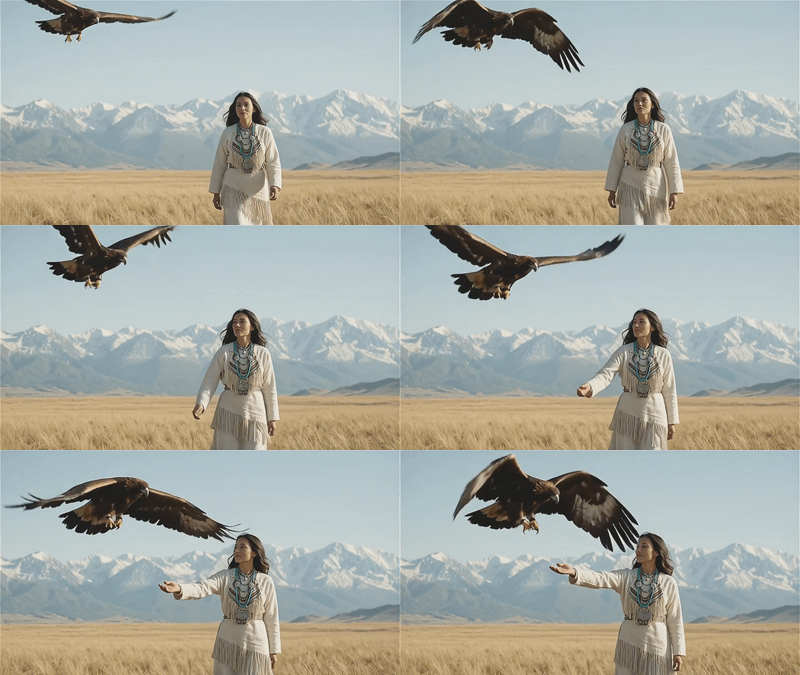
Apply movement from a reference video to a character image. The image defines who appears. The video defines how they move.
Upload a portrait or full-body shot and a motion reference clip. Kling 3.0 transfers full-body movement, facial expressions, and hand gestures onto your character and renders a short clip at 720p. Add an optional prompt to shape lighting or background. Keep the original audio from the reference video or drop it.
No text-to-motion guessing. The movement comes from real footage.
How do you use Kling 3.0 Standard Motion Control?
Upload a character image and a motion reference video. Set Character Orientation to match either the video or the image depending on your shot. Add an optional prompt for style direction. Kling 3.0 does the motion transfer. Body, face, and hands all follow the reference clip.
Reference image This is the character that appears in the output. A clean portrait or full-body shot with the subject clearly visible works best. Keep proportions clear and avoid occlusion. Busy backgrounds or motion blur in the source will carry through to the output.
Reference video This is the motion source. Kling 3.0 reads body movement, facial expressions, and hand positions from it. Standard mode supports reference clips up to 30 seconds in video orientation. Clear, single-person movement transfers cleanest. Fast overlapping gestures or two-person frames are harder for the model to follow.
Character Orientation This is the setting most people overlook. Two options:
Want the output character to follow the movement structure of the reference clip? Set it to "video." Better for complex actions like dancing, walking, or performance acting. Reference video limit: up to 30 seconds.
Want the output to follow the camera framing and angle of the reference image instead? Set it to "image." Better for camera-led shots where the background movement matters more than body motion. Reference video limit: up to 10 seconds.
Prompt Optional. Use it to shape style, lighting, or background rather than motion. "Studio lighting, white background" or "outdoor scene, golden hour" are the right kinds of instructions here. The motion comes from the reference clip, so you don't need to describe the action.
Keep original sound (default: on) Toggle this on to carry the reference video's audio into the output. Useful for preserving timing against music, dialogue rhythm, or ambient sound from the source clip. Turn it off if you plan to add your own audio in post.
Element 1 frontal image (optional) An additional frontal reference image for tighter face matching. Not required for most use cases. Use it when the reference image doesn't show the face clearly enough and you need stronger identity preservation.
What is Kling 3.0 Standard Motion Control good for?
Standard Motion Control works best for talking clips, dancing sequences, walking shots, light acting beats, and social content at 720p. Standard is faster than Pro mode. Use it to test motion references and lock timing before committing a final take to Pro for the polished render.
Dance and performance content. Film yourself or someone else doing a dance, then transfer that motion onto an AI character, illustrated figure, or digital avatar. The character moves with the same body mechanics, timing, and expression as the reference performer.
Talking head and presentation clips. Upload a portrait and a reference clip of someone speaking. Kling transfers the head movement, facial expressions, and gestures. Good for creating character-driven explainer content, social posts, and brand spokesperson clips without filming the actual character.
Social content at speed. Standard handles most social formats well. TikToks, Reels, and short previews where 720p is enough are the natural use case. Portrait shots, full-body characters, gesture transfer, and dance content all work.
Blocking and approvals before Pro. A practical approach: test several motion references in Standard to find the right timing, performance, and orientation setting. Once you have the take you want, re-run it in Pro for the final render at higher resolution and sharper detail.
The tradeoff versus Pro. Standard is softer. Fast or overlapping movements are more prone to hand and face morphing. Textures lose sharpness in high-motion sequences. If you're delivering a polished hero shot, Standard is for blocking and approvals. Pro is for the final output.
FAQ
What is the difference between "video" and "image" character orientation in Kling 3.0?
"Video" orientation makes the character follow the body movement from the reference clip. Better for dance, walking, and acting. Supports up to 30-second reference clips. "Image" orientation makes the output follow the camera framing from the reference image. Better for shots where background and composition matter more than body motion. Limited to 10-second reference clips.
How long can the reference video be for Kling 3.0 Standard?
Up to 30 seconds when Character Orientation is set to "video." Up to 10 seconds when set to "image." Clear, single-person footage transfers cleanest. For longer sequences, split your reference video into segments and generate each separately.
Does Kling 3.0 transfer facial expressions and hand gestures?
Yes. Kling 3.0 reads body movement, facial expressions, and hand positions from the reference video and applies them to the character in your image. Face and hands are the hardest parts. Clean, well-lit reference footage with visible hands produces the most accurate transfer. Fast or overlapping gestures may produce artifacts in Standard mode.
Should I use Standard or Pro for my final output?
Use Standard for testing and iteration. It's faster and lets you try multiple motion references and orientation settings quickly. Once you've locked the timing and performance you want, switch to Pro for the final render. Pro produces sharper detail, better hand fidelity, and cleaner textures at higher resolution.
Can I keep the audio from my reference video?
Yes. Toggle "Keep original sound" to on (the default). The reference video's audio carries into the output. This preserves music timing, dialogue rhythm, and ambient sound. Turn it off if you're replacing the audio in post.
How do I run Kling 3.0 Standard Motion Control online?
You can run Kling 3.0 Standard Motion Control online through Floyo. No installation, no setup. Open the workflow in your browser, upload your image and video, and hit run. Free to try.
Read more


_1762345216109.gif?width=400&height=300&quality=80&resize=contain&format=origin)