Flux 2 Klein 9B + KV Cache for Image Editing
Edit images with Flux 2 Klein 9B in 4 steps. KV Cache speeds every run by reusing attention work across steps. Upload an image, describe the edit, hit Run.
flux
flux 2 klein
Image
image to image
style transfer
1
727

_1776914836171.png?width=1400&height=620&quality=80&resize=contain)
_1776914841087.png?width=1400&height=620&quality=80&resize=contain)

_1776914836171.png?width=104&height=104&quality=80&resize=cover)
_1776914841087.png?width=104&height=104&quality=80&resize=cover)

Nodes & Models
KSamplerSelect
LoadImage
VAELoader
flux2-vae.safetensors
CLIPLoader
qwen_3_8b_fp8mixed.safetensors
UNETLoader
flux-2-klein-9b-kv.safetensors
RandomNoise
GetImageSize
CLIPTextEncode
FluxKVCache
ConditioningZeroOut
VAEEncode
EmptyFlux2LatentImage
Flux2Scheduler
ReferenceLatent
CFGGuider
SamplerCustomAdvanced
VAEDecode
PreviewImage
ImageCompare
ImageResize+
ImageResize+
Klein 9B image editing in 4 steps. Pixels you don't edit stay locked.
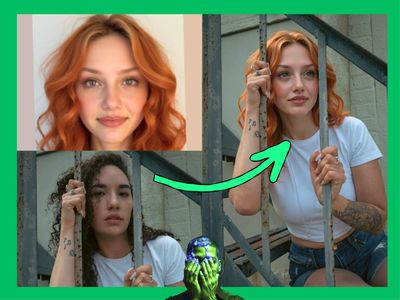
Upload an image, describe the edit, and Klein 9B rewrites the parts you named. Backgrounds hold. Faces keep their structure. Fine details stay aligned between before and after. The rest of the image doesn't drift while the edit happens, because Klein 9B uses your original as a reference the whole way through.
KV Cache speeds each run by reusing attention work across steps. Built-in before/after view shows what moved and what stayed.
How do you edit images with Flux 2 Klein 9B?
Upload the image, write what you want to change, and run. Klein 9B reads your prompt, edits the regions you described, and leaves the rest locked to the original. Backgrounds don't shift. Faces don't warp. The 4-step scheduler and KV Cache keep each edit fast, so you can iterate on prompts without waiting around.
Edit prompt Describe what changes, not the whole image. "Change the season to winter" lands cleaner than "a house in winter with snow everywhere." Klein 9B keeps what you don't mention, so short and specific prompts tend to win.
Steps Default is 4. That's the sweet spot for Klein 9B with KV Cache. Want sharper detail on complex edits? Try 6 to 8. Pushing past that rarely helps and eats run time.
CFG Default is 1. Klein 9B is built for CFG=1 and doesn't respond the way older models do to higher values. Leave it unless you have a reason to move it.
Sampler Default is euler. Predictable, fast, works across edit types. Try a different sampler if you want to A/B the feel, but this one's the safe pick.
Seed Starts fixed at 0. Keep it fixed while you're iterating on the prompt so you can tell what the prompt change did versus what the noise did. Switch to randomize once the prompt reads right, then roll a few seeds to pick your favorite.
What is Flux 2 Klein 9B image editing good for?
Changing one thing about an image while keeping everything else close to the original. Scene and weather swaps, wardrobe changes, background replacements, adding or removing specific objects. Klein 9B reads natural language edit prompts, so you describe the change the way you would describe it to a person.
Good fits: product shots where the item stays the same but the environment changes. Portrait edits where the subject holds but the outfit or setting shifts. Concept exploration where you want five variations of the same scene at different times of day.
Where it struggles: fine-grained positional edits ("move the mug two inches left") and pixel-perfect face consistency across many edits. For the first, reach for ControlNet or inpainting. For the second, a dedicated consistency LoRA workflow works better.
FAQ
How many steps does Flux 2 Klein 9B need for image editing? Four is the default and the sweet spot for this model. Klein 9B is designed to produce clean output at low step counts, and KV Cache tightens that further. Push to 6 or 8 only if complex edits come back soft. Going past 10 rarely changes the result.
Does Flux 2 Klein 9B need a negative prompt? No. This workflow zeros out negative conditioning and runs at CFG=1. Klein 9B is trained to follow positive prompts cleanly without needing a negative prompt to steer away from anything. Leaving it empty is the intended behavior, not a shortcut.
What does KV Cache do in Flux 2 Klein 9B? It stores the key and value tensors from attention layers so they don't have to be recalculated on every step. For image editing, where your reference image stays the same across steps, that's a meaningful speedup with the same output quality. You get Klein 9B at lower latency.
Do I need to set the output resolution? No. The workflow reads the size of your input image and matches it. Upload a 1024x1024, get a 1024x1024 edit. Upload a 1920x1080, get a 1920x1080. Skip the resolution fields unless you specifically want to upscale or downscale.
How well does Flux 2 Klein 9B keep the rest of the image stable? Well. Klein 9B holds your input image as a reference through every step, so regions outside your edit prompt stay close to the source. Backgrounds hold, faces keep their structure, fine details don't drift. For pixel-perfect lock on exact faces across many edits, stacking a consistency LoRA on top pushes it further.
How to run Flux 2 Klein 9B online? You can run Flux 2 Klein 9B image editing online through Floyo. No installation, no setup. Open the workflow in your browser, upload your input image, describe the edit, and hit run. Free to try.
Read more