Chroma 1 Radiance · Text to Image
Generate artifact-free images directly in pixel space with Chroma 1 Radiance. No VAE compression, no decode step. Write a prompt and hit run. Apache 2.0.
Chrome1 Radiance
Image
Macro Photography
Text2Image
6.3k


_1762840935634.png?width=1400&height=620&quality=80&resize=contain)


_1762840935634.png?width=104&height=104&quality=80&resize=cover)

ABOUT THE WORKFLOW
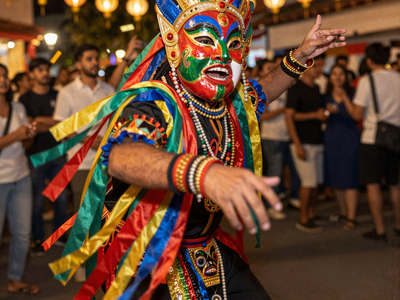
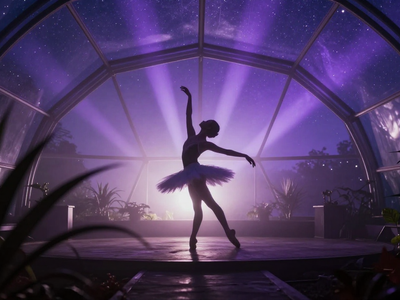
Generate Images in Pixel Space Write a prompt and get a picture built directly in pixel space. No VAE encoding or decoding step, so there are no compression artifacts and the live preview during generation is the final image. The result is saved at 1920 x 1088.
Model
Chroma 1 Radiance v0.4 by the LodestoneRock team. Built on the FLUX.1 Schnell architecture at about 8.9 billion parameters, retrained to generate directly in pixel space instead of latent space. Uses a T5-XXL text encoder and a BetaSampling schedule. Apache 2.0. Still training; this is a work-in-progress checkpoint.
HOW IT WORKS
Step 1. Write your prompt Describe the picture. Long, detailed prompts with lighting, textures, and composition produce the best results. A negative prompt ships loaded with common quality issues. Works great with: macro photography · portraits · concept art · architectural stills
Step 2. Hit run and download The model generates the image directly in pixel space in 30 passes using a beta sampling schedule. The result is saved under Chroma-Radiance. Ready for: Photoshop · Figma · Canva · any editor
First time? Leave every setting as-is. The defaults (1920 x 1088 · 30 steps · CFG 3.5 · flow shift 1 · random seed) are the right starting point for almost everyone.
RECOMMENDED SETTINGS
Quick-start guide. Find the goal that matches yours and copy the settings.
Standard generation (most people) — 1920 x 1088 · 30 steps · CFG 3.5 · flow shift 1 · random seed. The right starting point for almost everyone.
Complex compositions with many elements — Raise flow shift from 1 toward 3. Higher shift helps the model manage spatial complexity. The default of 1 is the creator's recommended value for single-subject prompts.
The picture drifts from the prompt — Raise CFG above 3.5. Higher values hold the model closer to your words, but push too far and the picture oversaturates.
Faster runs at the cost of memory — Raise the nerf_tile_size in ChromaRadianceOptions. Larger tiles trade VRAM for speed. Set it as high as your GPU allows.
Want a different size — Change width and height in the EmptyChromaRadianceLatentImage node. Heights must be divisible by 32.
Want to steer away from something — Edit the negative prompt. The default covers common quality issues. Add anything specific you want to avoid.
Reproduce a result you liked — Set a fixed seed. The same prompt, size, and seed return the same picture.
Prompt: Write it as a scene description, not keywords. "Hyperrealistic macro photograph of tiny bakers collaborating on an enormous golden-brown croissant, warm kitchen lighting, floating flour dust catches the light, cinematic depth of field" gives you more than "bakers croissant macro." The T5-XXL encoder parses grammar, so natural language works better than comma-separated tags.
LEARN
📹 Videos
ComfyUI 101 Free Course ft. Sebastian Kamph
Floyo 101 for Team Collaboration
✨ Quick links
USE CASES
📸 Artifact-Free Stills Generate images with no VAE compression artifacts, where colour fidelity and detail matter at the pixel level.
🎨 Portraits and Anatomy Render faces, hands, and human proportions with higher accuracy than most comparable models at this parameter count.
🖼️ Concept Art and Rapid Prototyping Explore visual ideas at speed, knowing the live preview matches the final output with no surprise quality drop at decode.
🛍️ Commercial Production Generate production-ready images under Apache 2.0 with no licence restrictions, no watermarks, and no revenue threshold.
WHAT WORKS BEST / WHAT TO AVOID
✅ Works great
Long, natural-language prompts with scene detail
Portraits, hands, and anatomy
Macro photography and close-up detail
Flow shift 1 for standard subjects, up to 3 for complex compositions
⚠️ May produce softer results
Speed-sensitive workflows (pixel space is slower per step than latent)
Sizes pushed well past 2 megapixels
Expecting LoRA compatibility identical to FLUX (Chroma has its own ecosystem)
Treating this as a finished model (v0.4 is still in training)
FAQ
What is Chroma 1 Radiance? Chroma 1 Radiance is a work-in-progress variant of the Chroma family by LodestoneRock. It is built on the FLUX.1 Schnell architecture at about 8.9 billion parameters and retrained to generate images directly in pixel space instead of latent space. That means no VAE encoding or decoding, which eliminates compression artifacts and makes the live preview during generation match the final output. Apache 2.0.
What does pixel space generation mean? Most image models generate in latent space and then decode the result through a VAE, which introduces compression artifacts. Chroma 1 Radiance skips that step and generates the image directly at pixel resolution. The trade-off: each step is slower because the model works at full pixel dimensions rather than a compressed latent, but the output has no VAE loss. What you see forming during generation is the final picture.
Is Chroma 1 Radiance a finished model? No. Version 0.4 is a work-in-progress checkpoint that is still training. The model card on Hugging Face warns to "expect some squiggles." Chroma1-HD (the latent-space version) is the finished, stable release in the Chroma family with over 56,000 downloads. Radiance is the experimental pixel-space branch.
Is Chroma 1 Radiance free for commercial use? Yes. It is released under Apache 2.0, which allows commercial use, modification, fine-tuning, and redistribution with no revenue threshold and no territory restrictions.
How does Chroma compare to FLUX.1 and FLUX.2? Chroma is a de-distilled fork of FLUX.1 Schnell (8.9B) with the timestep-encoding block replaced and the model retrained on a curated 5M-image dataset. It is smaller and lighter than FLUX.2 Dev (32B), runs with true CFG and a negative prompt (which FLUX.1 Schnell does not support natively), and carries an Apache 2.0 licence rather than FLUX Dev's non-commercial licence. The Radiance variant adds pixel-space generation, which is unique in this parameter class.
What is flow shift and when should I change it? Flow shift controls how the model distributes compute across the generation timeline. The default of 1 is the creator's recommended value and produces the highest detail for standard prompts. Raise it toward 3 when working with complex compositions that have many spatial elements. Above 3 the model overcommits to structure at the expense of texture.
How to run Chroma 1 Radiance online? You can run Chroma 1 Radiance online through Floyo. No installation, no setup, no model downloads. Open the workflow in your browser, write a prompt, and hit run. Free to try.
WHY FLOYO?
Floyo is the only platform with team collaboration for ComfyUI in the browser. You run workflows with no install. You share run history, assets, and models across your team. You pay only when you generate. Floyo supports open-source and closed-source models.
A designer runs an edit and likes the result. A teammate opens that exact run from shared history and keeps going. No file handoffs. No version confusion.
For studios and enterprise teams, Floyo adds private workspaces, pooled resources, and a team usage dashboard. Other ComfyUI cloud tools run for one person at a time. Floyo runs for the whole team, with transparent per-generation costs.
Ready to try it? Write a prompt and run it. The picture is built in pixel space with no VAE loss.
Questions? Watch the free course or check the FAQ above.
Read more