Audio to Spectogram using Orion4D Secret
Turn any image into audio by encoding it as a spectrogram. Upload a picture, set your frequency range, and get an MP3 that shows your image when visualized.
audio
audio encryption
Image
image to image
spectrogram
313

Nodes & Models
VHS_LoadAudioUpload
VHS_LoadAudioUpload
VHS_LoadAudioUpload
Note
WorkflowGraphics
LoadImage
PreviewImage
SaveAudioMP3
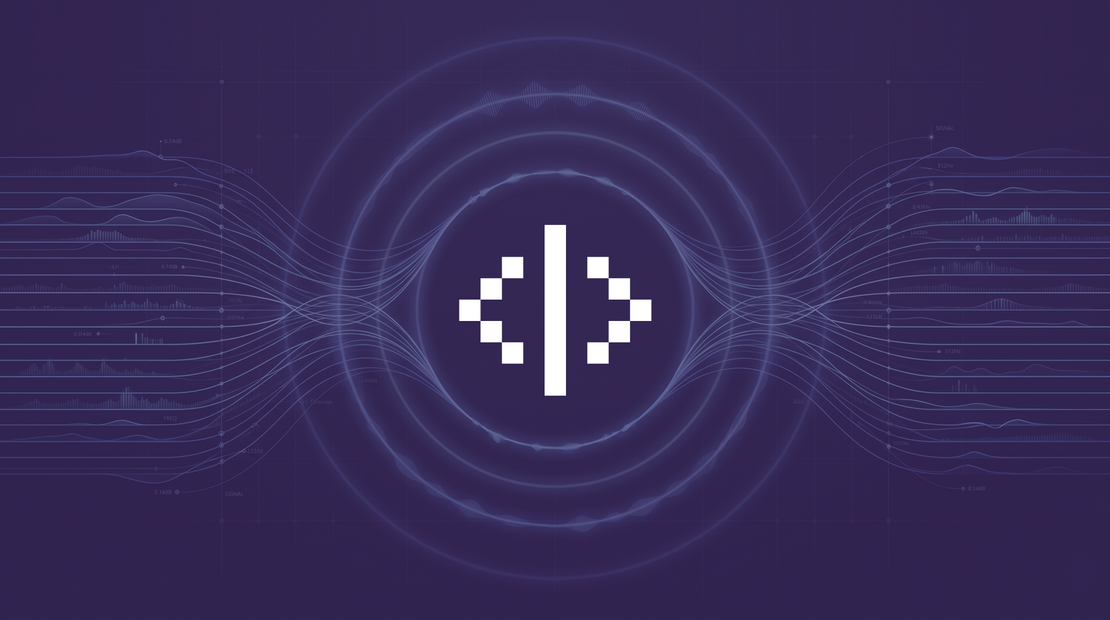
Turn an image into audio. This workflow encodes your uploaded picture as a spectrogram, so when anyone plays the output file and views its frequency spectrum, your original image appears.
Upload an image, set how long the audio clip should be, and hit run. You get an MP3 file back. Open that MP3 in any spectrogram viewer (like Spek or Audacity) and your image is right there in the frequencies. The workflow also includes a reverse path for converting audio back into a spectrogram image.
How do you convert an image to a spectrogram audio file?
Upload your image, set a duration and frequency range, and the workflow encodes your picture into the audio spectrum. The output is an MP3 file. When that MP3 is visualized in a spectrogram viewer, your original image appears in the frequency data.
Image This is your source picture. It gets mapped across the frequency spectrum of the output audio. High-contrast images with clear shapes work best. Detailed photos with lots of gradients still work, but the spectrogram readback will be softer.
Duration (seconds) Default is 30 seconds. Longer durations spread the image across more time, which means higher fidelity when you view the spectrogram. Shorter durations compress the image into a tighter window. The builder's note: duration equals quality. Want a clean spectrogram readback? Go longer. Need a quick clip? 10 to 15 seconds still works, but expect some loss in detail.
Sample Rate Default is 44100 Hz (standard CD quality). This controls the resolution of the audio encoding. Higher sample rates give you more headroom in the upper frequencies. For most uses, 44100 is the right choice.
Min Frequency / Max Frequency Defaults are 200 Hz and 20000 Hz. This sets the frequency band your image gets mapped into. The full range (200 to 20000) uses most of the audible spectrum. Want to hide the image in a narrower band? Tighten these values. Want to push it into ultrasonic territory? Raise the max above 20000 (if your sample rate supports it).
Output Format The workflow saves as MP3. Two output nodes are included: one at 128k bitrate and one at 320k. Higher bitrate preserves more of the spectral detail. If the spectrogram matters more than file size, go 320k.
What is spectrogram art good for?
Spectrogram encoding hides images inside audio files. It is used for easter eggs in music production, ARG puzzles, steganography experiments, data art, and creative projects where you want to embed a visual message in a sound file.
Producers and sound designers use this to embed hidden images in tracks. Aphex Twin, Venetian Snares, and others have put faces and logos in their spectrograms as easter eggs for fans to find.
For alternate reality games and puzzles, spectrogram encoding is a classic technique. Players receive an audio file and have to think to check the spectrogram for a clue.
If you work in data art or creative coding, turning visuals into sound (and back) opens up some interesting territory. The workflow includes a bypassed reverse path that converts audio back into a spectrogram image, so you can round-trip your work.
This is a niche tool. If you need standard image editing or generation, look at the Flux or Z-Image workflows instead.
FAQ
What image format works best for spectrogram encoding? High-contrast images with clear outlines give the cleanest spectrogram readback. Black and white logos, text, and simple shapes look great. Photos work too, but fine gradients get softer in the frequency domain. PNG or JPG both work as inputs.
How long should the audio clip be for a clear spectrogram? Longer is better for clarity. At 30 seconds (the default), you get strong detail. At 10 seconds, you still see the image but with some compression artifacts. For a logo or text, 15 to 20 seconds is a good balance between file size and readability.
What MP3 bitrate should I use for spectrogram art? Go 320k. MP3 compression strips out frequencies the codec considers inaudible, which can degrade your hidden image. 320k preserves the most spectral data. 128k still works for bold, high-contrast images, but fine details will blur.
How do I view the spectrogram after generating the audio? Open the MP3 in any spectrogram viewer. Audacity (free) has a spectrogram view built in. Spek is another free option that shows the full frequency spectrum. Most DAWs also have spectrogram display modes.
How to run spectrogram audio encoding online? You can run spectrogram audio encoding online through Floyo. No installation, no setup. Open the workflow in your browser, upload your image, and hit run. Free to try.
Read more